
Billboard formats in the UAE mostly come down to three structures: the hoarding, the unipole and the megacom. A hoarding is a large board fixed to a frame or a wall, a unipole lifts a board on a single column, and a megacom is a very large structure built for landmark visibility. Picking between them is less about taste and more about three questions: how high, how big and how long.
A typical brief shows why this matters. A marketing manager asks for "a billboard on the main road", and three different structures could answer that sentence with three very different price tags, build times and levels of presence. The notes below separate them so that the conversation with your media partner starts from the same vocabulary.
What actually separates the three billboard formats
The three formats differ along the same axes, and it helps to name them before looking at each one.
- Elevation: how far above the traffic and the surrounding clutter the message sits.
- Scale: how much of a driver’s field of view it occupies at the distance where the message must be understood.
- Permanence: how much engineering sits behind it, and therefore how long it makes sense to leave it up.
Everything else, from lighting to panel construction, follows from where a structure lands on those three axes.
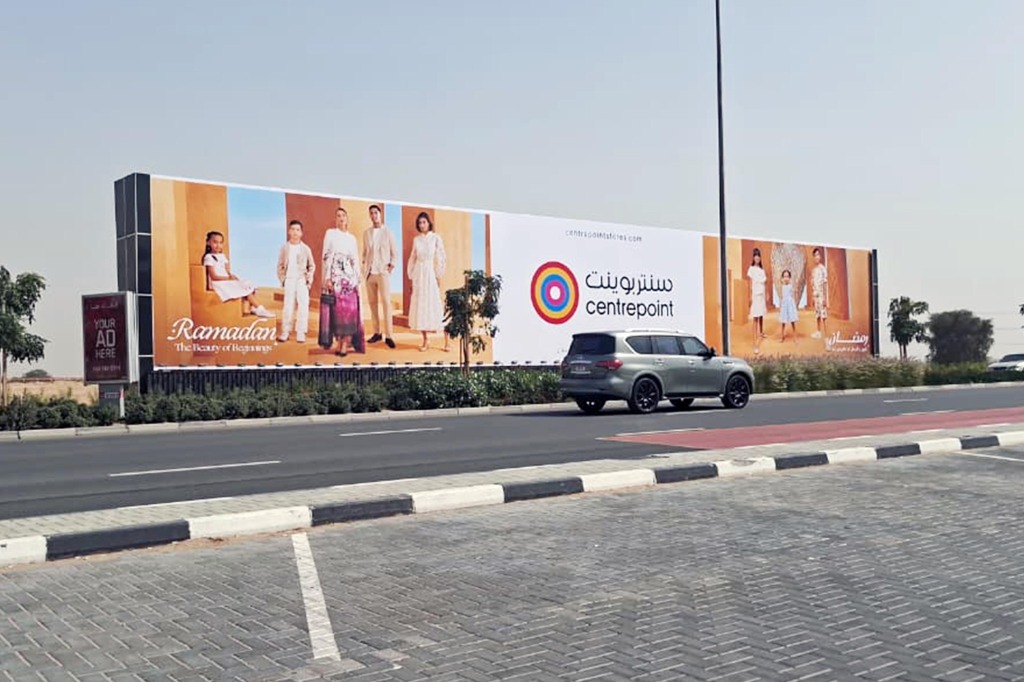
Hoarding: the flexible workhorse
A hoarding is the most adaptable of the three. It can stand on open land, sit on the side of a building or wrap a construction site boundary, and it can be produced and changed relatively quickly because the structure is simpler than the other two.
Choose a hoarding when
- the site is on a road with a long, clear approach and you do not need extra height;
- you want several boards across a district rather than one large statement;
- your artwork may change during the campaign and you want a format that is easy to update.
Think twice when
- the board will compete with signage, trees or buildings at eye level;
- the road is fast and the approach is short, so the message gets very little reading time.
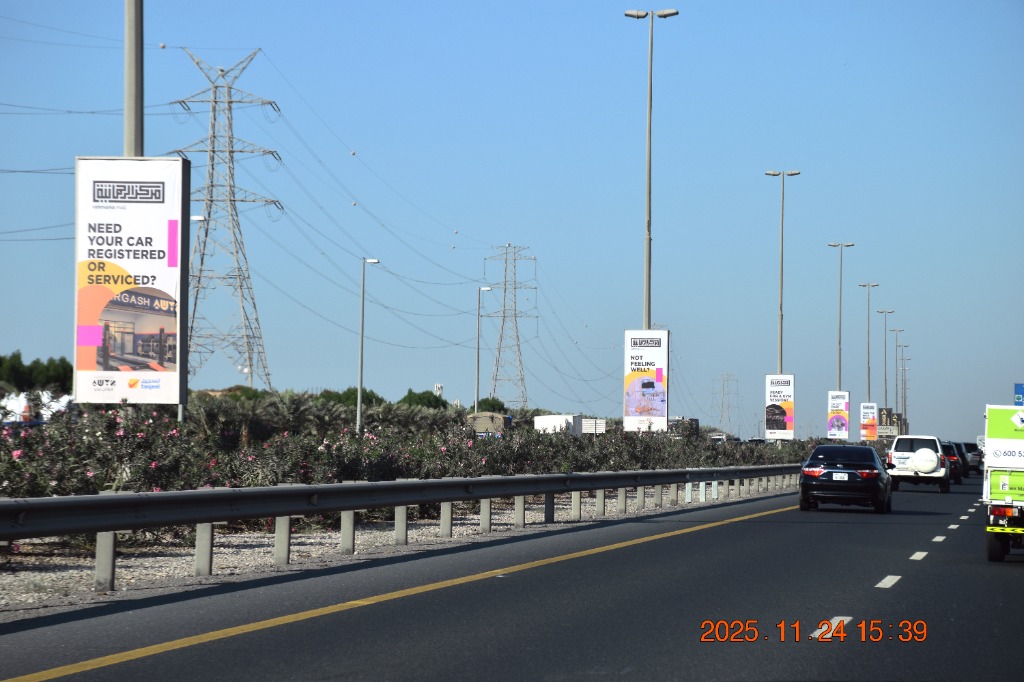
Unipole: height and a clean sightline
A unipole carries its board on one column, which does two useful things. It raises the message above vehicles and street clutter, and it leaves little structure to distract from the artwork. That makes it a natural fit for highways and arterial roads where drivers look further ahead.
Choose a unipole when
- the road is wide, busy and fast, and the board must read over other vehicles;
- a clean, premium look matters to the brand;
- you need presence along a corridor and can use several units in sequence.
Think twice when
- you need a location that simply has no space for a column and foundation;
- the timeline is tight, since a built structure involves more steps than a printed board on an existing frame.
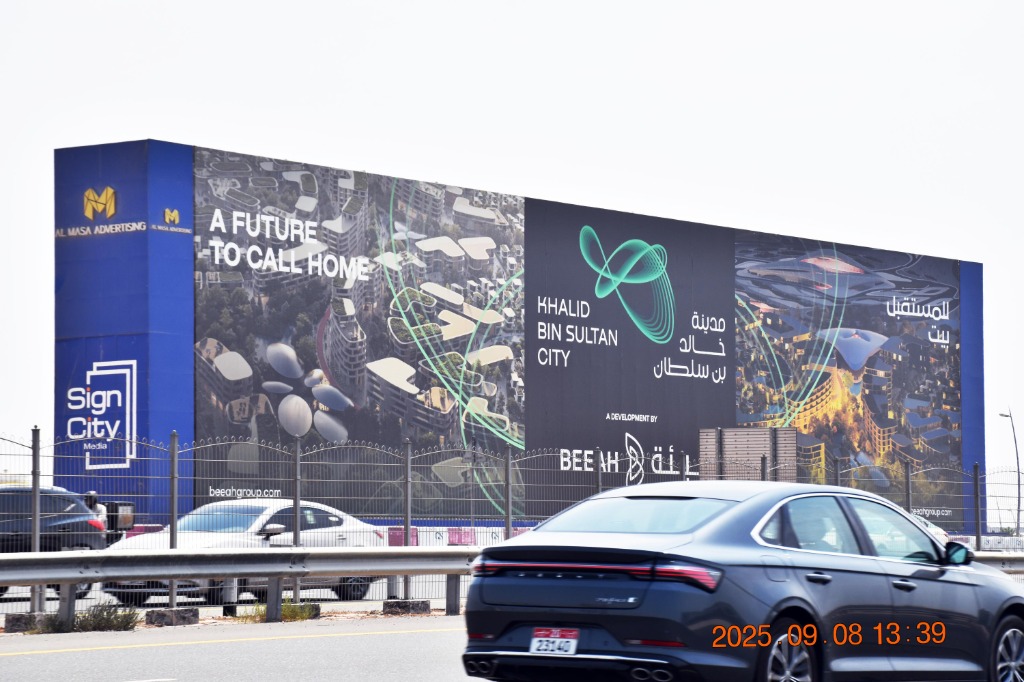
Megacom: when the junction itself is the brief
A megacom structure exists for one reason: to be the thing people remember about a junction or stretch of road. Its scale lets a brand own a major interchange the way a landmark building owns a skyline. It also asks the most of your creative, your printing and your installation crew.
Choose a megacom when
- you are launching something significant and want it to feel unavoidable;
- the campaign runs long enough to justify the production effort;
- your creative is bold enough to survive being seen from far away.
Think twice when
- the message depends on small print or detail, because scale does not rescue a crowded layout;
- the budget would be better spread over several smaller placements.
Matching each format to the question in your brief
When a brief arrives, we tend to translate it into one of the following questions before suggesting any structure.
- "Do we need to be seen everywhere on this road?" Several hoardings or unipoles in sequence usually answer it.
- "Do we need one unmissable location?" A megacom, or a well-placed unipole at a junction, is the stronger answer.
- "Do we need to be flexible if the offer changes?" A hoarding with replaceable artwork is the practical route, and a screen may suit it even better, as we explain in our comparison of static billboards and digital screens.
If your question is wider than structures alone, our overview of the types of outdoor advertising in the UAE places these three alongside bridges, lampposts and facades.
What changes in production and installation
Larger structures change how the print job is handled. A board is printed in sections, so the artwork has to be prepared with joins in mind, and critical elements such as faces or logos should never sit across a seam. The bigger the structure, the more the finish, tensioning and alignment on site decide how good it looks, regardless of how good the design was on screen.
Installation also scales up. Working at height needs trained crews and the right access equipment, and weather on the day can move the schedule. Because Al Masa prints in-house and installs with its own crews, the person who printed the panels is usually on the same team as the person fitting them, which shortens the loop when something needs adjusting. For file preparation, our artwork and file checklist covers the details that cause the most reprints.
Creative rules that hold across all three formats
Whichever structure you pick, the same few habits make the artwork work harder. Treat them as a test your design must pass before it goes to print.
- One idea per face. If two messages are competing, the driver will remember neither.
- Contrast beats cleverness. A pale logo on a busy photograph disappears at distance, however good it looks on a laptop.
- Put the brand where the eye lands first, not in a corner where it is added as an afterthought.
- Test at thumbnail size. If the layout still reads when shrunk to the size of a stamp, it will usually read from the road.
These rules matter more as structures get larger, because a weak idea simply becomes a very large weak idea. Our piece on why simplicity wins in billboard creative expands on the reasoning.
Questions to ask before you book a structure
These questions cost nothing to ask and often save a campaign from a poor placement.
- Which direction does the face point, and which traffic actually sees it?
- What is in front of it, and could that change during the campaign, for example new construction or growing trees?
- Is the structure lit, and is the lighting suited to your artwork’s colours?
- Who handles approvals for this particular site and authority?
- Who maintains the structure if a panel is damaged during the booking period?
Rules and approval processes differ by emirate and by authority, and for its own network Al Masa handles them as part of the service. If you are choosing between hoarding, unipole and megacom for an upcoming campaign, talk to Al Masa on our contact page and we will walk through your sites and your creative together.