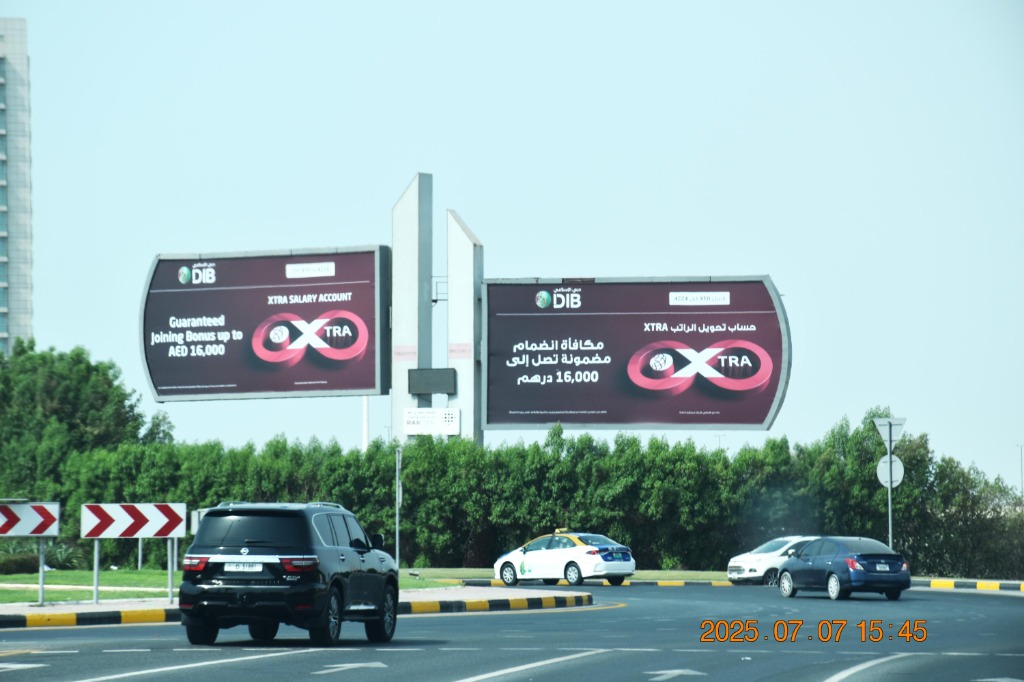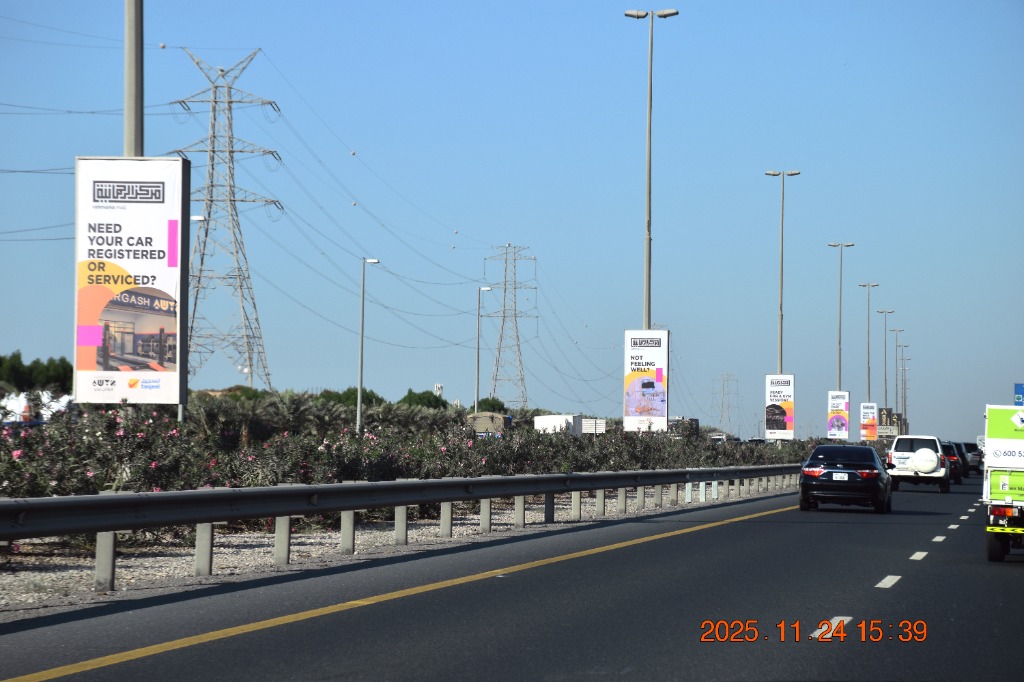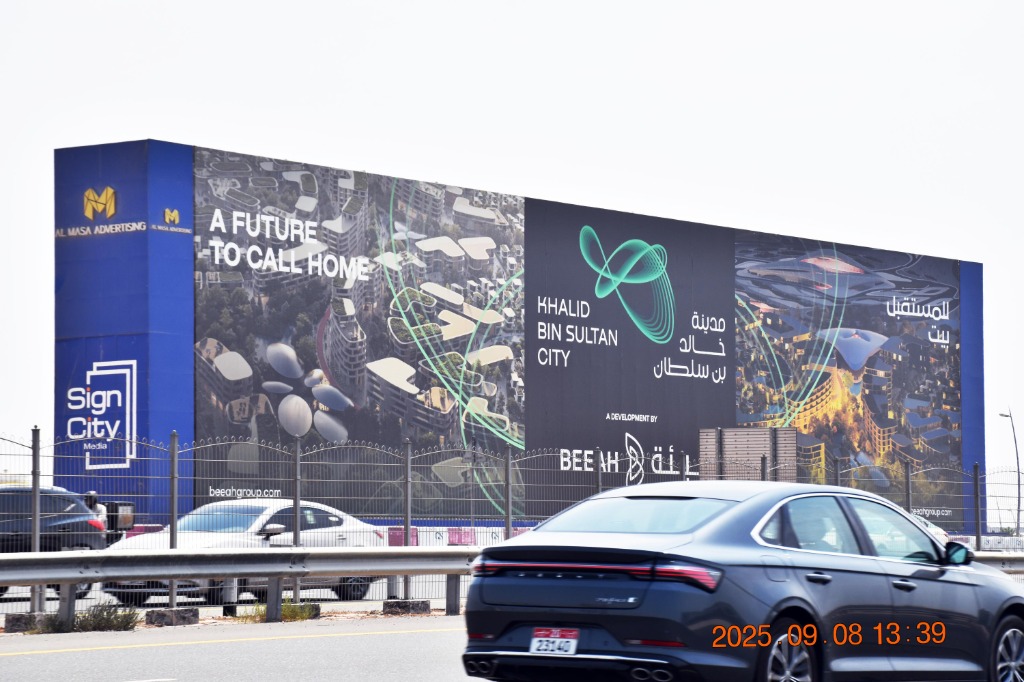

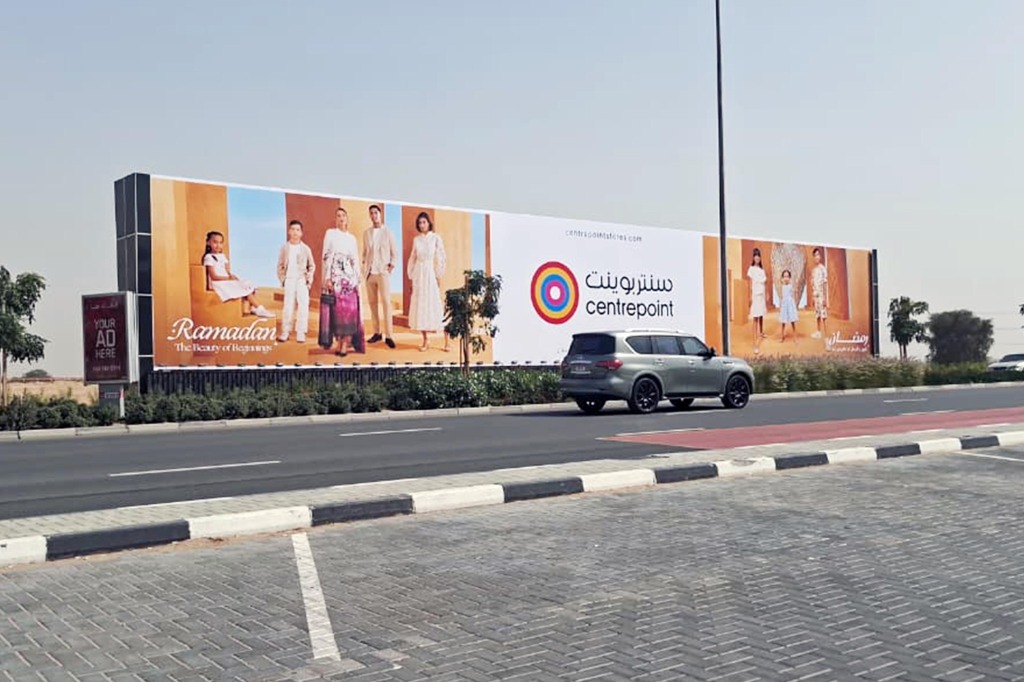
The main types of outdoor advertising in the UAE are hoardings, unipoles, megacom structures, bridge banners, lampposts, glass facades and building wraps, LED screens, taxi branding and in-mall branding. They differ in where people meet them, how long people have to read them, and how much work goes into producing and maintaining them. The right choice follows from your goal, not from whichever format looks most impressive in a mock-up.
Below we go through each family of formats, compare them side by side, and finish with a simple way to match a format to a campaign goal. Al Masa has printed, installed and maintained all of these across the seven emirates, so the notes come from working on sites rather than from a brochure.
The main types of outdoor advertising in the UAE at a glance
Start with the table. It is deliberately qualitative: sizes, availability and approval conditions change from site to site, so confirm those for any specific location before you commit.
| Format | Where it works | What it does best | Main trade-off |
|---|---|---|---|
| Hoarding | Large boards on plots, building sides and roadside land | A bold, simple message for passing traffic | Position matters more than anything else |
| Unipole | Single-column structures beside highways and main roads | Height and clear sightlines | Fewer places where one can be built |
| Megacom | Very large structures at major interchanges and corridors | Landmark presence | The heaviest production and installation effort |
| Bridge banner | Road and pedestrian bridges over busy routes | Faces drivers head-on | Needs wind-aware construction and skilled installation |
| Lamppost | Streets and districts, usually in repeated sets | Repetition along a route | Small panel, so copy must be short |
| Glass facade or building wrap | Building faces, podiums and towers | Turns architecture into the medium | Depends on the building and its owner |
| LED screen | Roadsides, building faces and malls | Changing messages without reprinting | Shared airtime, and creative must suit motion |
| Taxi branding | Vehicles moving through many districts | Travels to places a fixed site cannot | Seen briefly and from changing angles |
| In-mall branding | Atriums, entrances, escalators and columns | Reaches shoppers close to the point of purchase | Audience limited to one venue |
Roadside formats for drivers: hoardings, unipoles, megacoms and bridge banners
Roadside formats are built for people who are travelling, which means they get a few seconds at most. That single fact should shape your artwork before it shapes your budget: one idea, a short line and a logo that can be read from a distance.
A hoarding is the broadest category, a large printed board on a frame. A unipole carries the board on a single column, which lifts it above traffic and clutter. A megacom structure goes bigger still and is usually reserved for major interchanges where a brand wants to be the thing people remember about the junction.
A bridge banner works differently. It hangs on the bridge itself and faces approaching drivers directly, so there is no angle to compensate for. If you are weighing the three structure types against each other, our guide to hoarding, unipole and megacom formats goes into the practical differences.
Street-level formats: lampposts and taxis
Street-level formats suit audiences that move slowly or move repeatedly through the same areas. Lamppost panels are small, but they come in sets, so a message can follow someone along a boulevard or around a neighbourhood and build familiarity through repetition.
Taxi branding covers the opposite problem. A fixed site only reaches people who pass it, while a branded taxi reaches districts you may never have booked a site in. The trade-off is that people see the vehicle for a moment, from the side or the rear, so the design has to survive a quick glance.
- Use lampposts when a district, a route or an event is the target.
- Use taxi branding when you need presence across many areas at once.
- Keep the line short on both, because neither format rewards long copy.
Buildings and screens: facades and LED
When a building itself becomes the medium, the scale is hard to ignore. A glass facade or building wrap can cover the face of a tower or podium, and it works best for launches, openings and brands that want a permanent landmark rather than a rotating slot.
LED screens trade scale for flexibility. A message can change by time of day, by event or by offer without anyone climbing a structure, but your slot shares the loop with other advertisers and the creative needs to be designed for movement. Static artwork pasted onto a screen rarely does the format justice.
Indoor formats: in-mall branding
In-mall branding reaches people who are already in a buying frame of mind. Atrium hangers, entrance graphics, escalator wraps and column branding all give a brand time and proximity that a roadside format cannot. The audience, however, is limited to that venue, so it complements outdoor formats rather than replacing them for citywide reach.
How to match the format to your campaign goal
Begin with what you want people to do, then work back to where they will be when they should think of you. This short list covers the most common goals.
- Announce something to a whole city quickly: choose a few high-visibility roadside structures rather than many small panels.
- Dominate one corridor or interchange: pair a unipole or megacom with bridge banners on the same route.
- Build familiarity in a district: use lamppost sets, which repeat the message at walking or driving pace.
- Launch a building, project or opening: consider a facade or wrap, ideally visible from the approach roads.
- Promote an offer that changes often: an LED screen avoids reprinting every time the offer moves.
- Reach shoppers before they buy: add in-mall branding at the venue where the purchase happens.
Property developers, retailers and public-sector bodies each tend to lean on different parts of this list, and our pages for real estate campaigns show how those choices play out in practice.
Combining formats without scattering the budget
Most strong campaigns use two or three formats that support each other, not nine that compete. A common pattern is one dominant format for impact, one repeating format for familiarity, and one close-to-purchase format for the final nudge.
The risk is spreading the budget so thinly that no single placement makes an impression. If you cannot afford to do each format properly, do fewer formats properly. A single well-placed structure with confident creative will usually beat several half-hearted ones.
Approvals, printing and installation
Rules and approval processes differ by emirate and by authority, so a format that is straightforward in one location may need a different route in another. Check with the relevant authority for any site you are considering. For its own network, Al Masa handles the approvals, prints in-house, installs with its own crews and maintains the work during the campaign, which keeps responsibility in one place.
If you are still deciding which type fits, send us your goal, your target areas and your timing. Talk to Al Masa through our contact page and we will suggest a shortlist of formats and sites, with the trade-offs explained plainly.