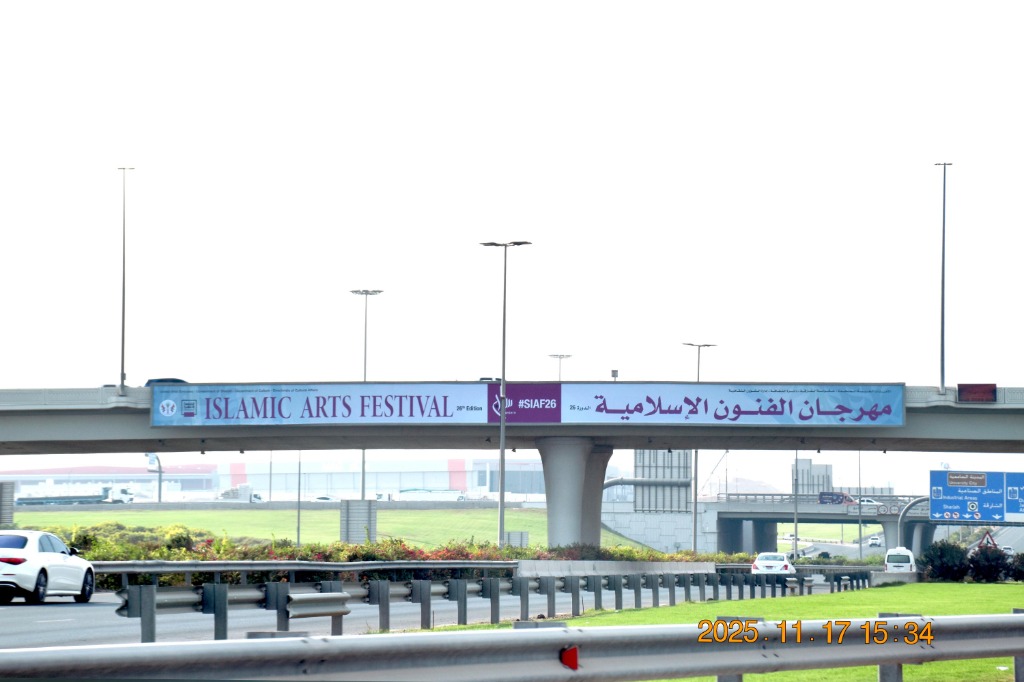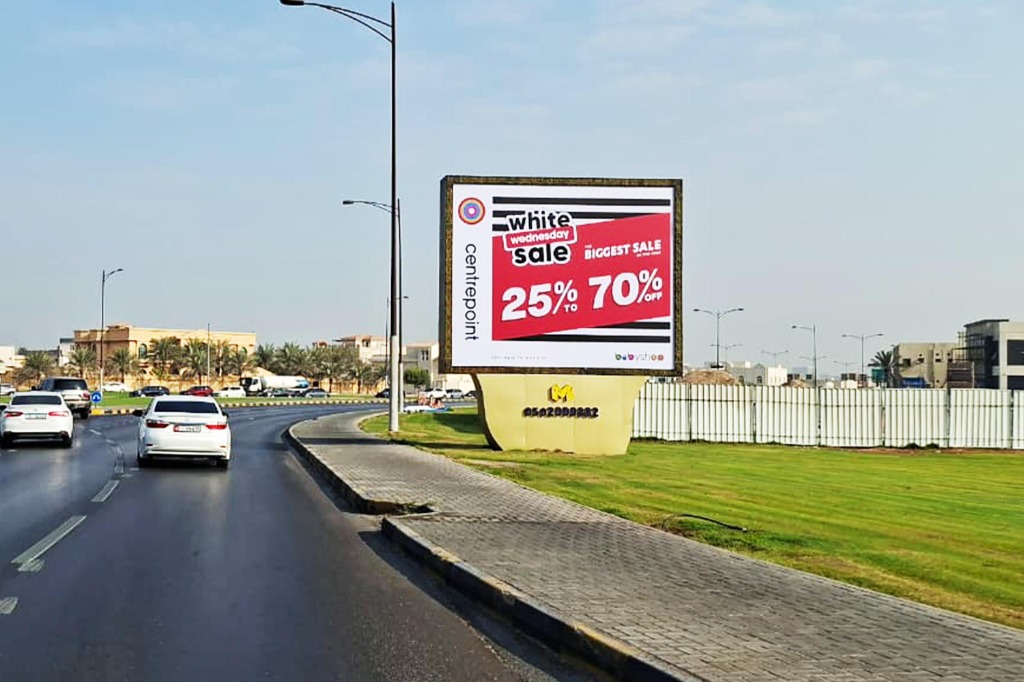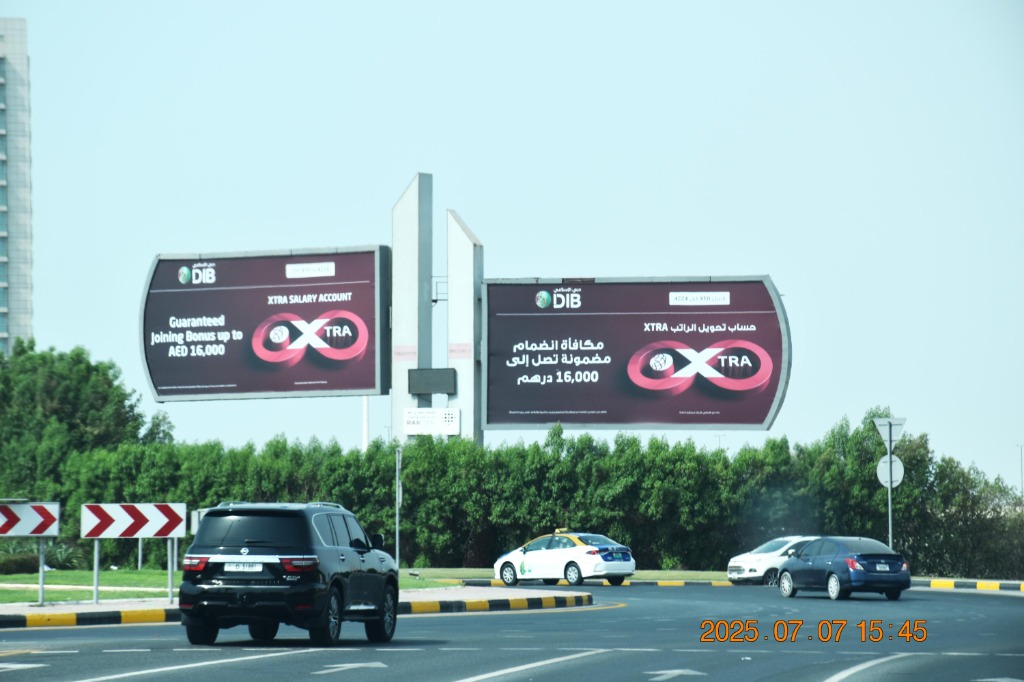
Every large-format structure in this country has the same blind spot. It sits on a road, so it reaches people travelling between places. It does not reach them once they are inside a neighbourhood, a souk, a business district or a hotel forecourt. That gap is what transit and street-level formats exist to close.
What a branded taxi actually does
Al Masa brands taxis in the two largest city fleets: more than 1,600 in Dubai and more than 1,200 in Abu Dhabi. A taxi is not a small billboard. It behaves differently in three ways that matter to a media plan:
- It goes where structures cannot. Residential streets, mall entrances, airport ranks, hospital forecourts, hotel driveways. No permit exists for a hoarding outside a residential tower; the taxi parks there anyway.
- It is read at low speed and close range. Pedestrians and stationary traffic see it from a few metres, which means it tolerates more information than a highway face. Still not a paragraph, but more than three words.
- Its exposure is distributed, not fixed. A structure delivers the same view repeatedly to the same corridor. A fleet delivers scattered views across a city. That is a strength for awareness and a weakness for dominating one location.
The honest limitation: you cannot promise that a given taxi passes a given street at a given hour. If a brief depends on a specific location at a specific time, a fixed structure does that and a fleet does not.
Street-level panels: the format most plans forget
Between the highway and the taxi sits a format that gets overlooked. Our inventory includes 20 mupi panels, positioned across Sharjah City, each 1.3m wide by 1.9m high.
That size is deliberate: it is roughly the scale of a standing person, positioned where people walk rather than drive. It works for retail, for events with a specific catchment and for anything where the audience is already on foot and close enough to read a second line of text.
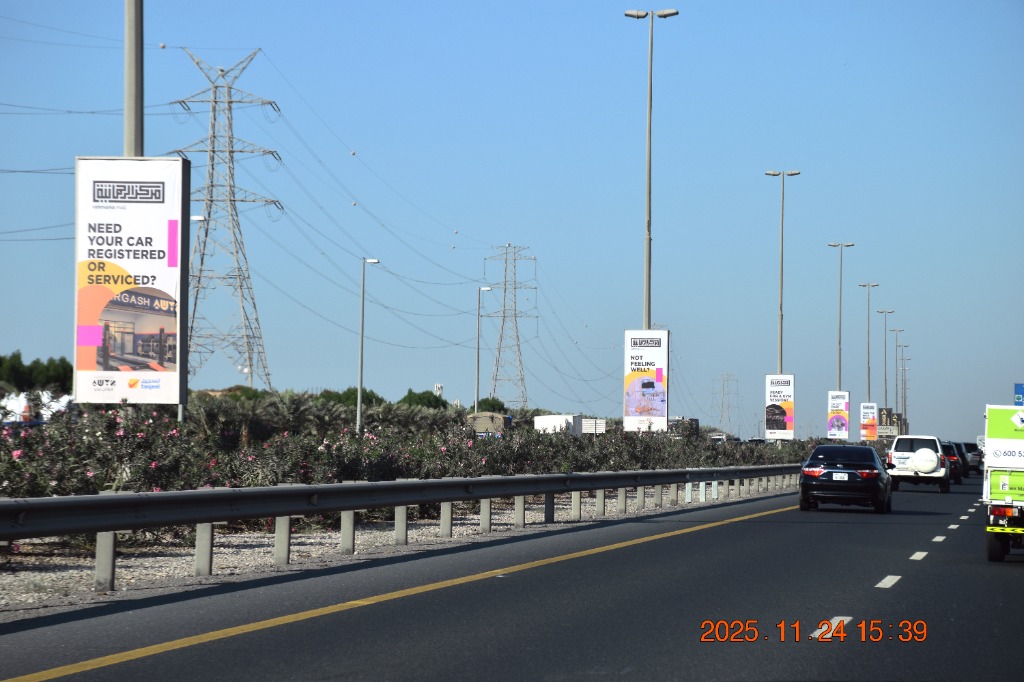
Lamppost networks do a related job at driving speed. With 1,595 lamppost units across the emirates, in three standard sizes (1.2m x 2.4m, 1.5m x 3m and 1.5m x 3.5m), they turn a corridor into repetition: the same message, several times, over a few hundred metres. One lamppost is nearly worthless; a run of twenty is a different medium entirely.
How the formats combine
A workable city plan usually layers three things:
- One or two large structures for the statement that has to be unmissable.
- A lamppost run on the corridor that carries your customers, for frequency.
- Taxis or street-level panels for the places the first two cannot physically reach.
Spending the whole budget on the first layer buys visibility without frequency. Spending it all on the third buys frequency without a landmark. The split is the plan.
Ask for the coverage, not the count
With fleet formats, the number of vehicles matters less than where they operate and for how long. When you brief us, the useful questions are which emirates the campaign needs, over what period, and whether the objective is city-wide awareness or pressure on particular districts.
You can see the fixed street-level inventory, with photographs and map positions, on the lamppost page and by emirate on the Sharjah and Fujairah pages. For taxi branding, tell us the cities and the window, and our planners will come back with what can be fielded for your dates.