
Most comparisons of static and digital outdoor advertising are written as though digital simply replaced static. In the UAE that is not what happened, and the difference between them comes down to something that rarely gets stated plainly: what you are actually buying.
Static buys the face. Digital buys a slot.
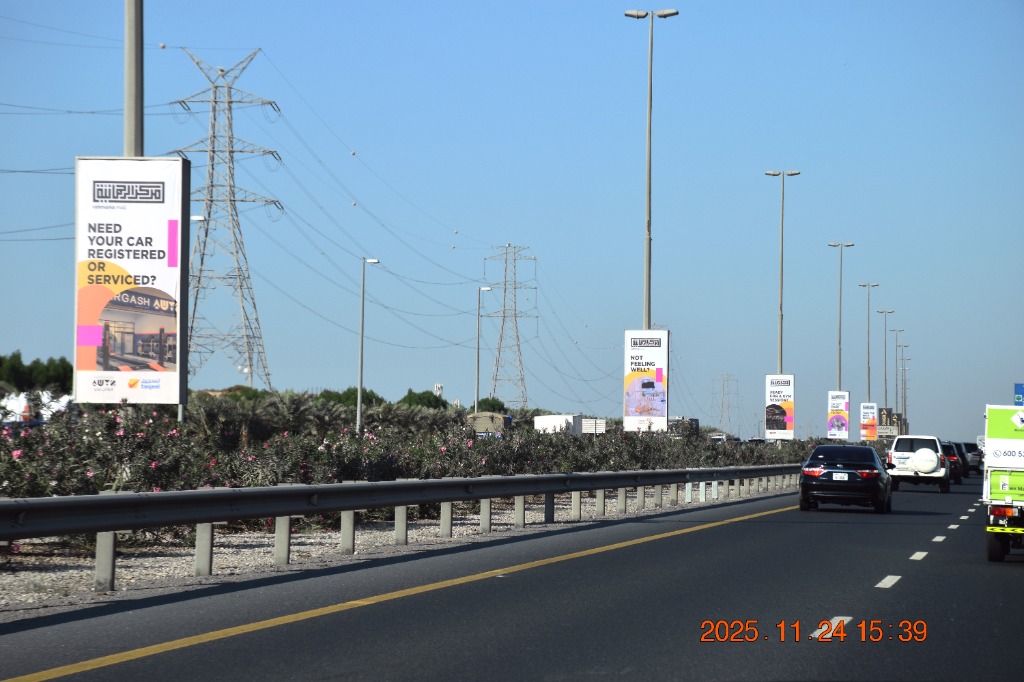
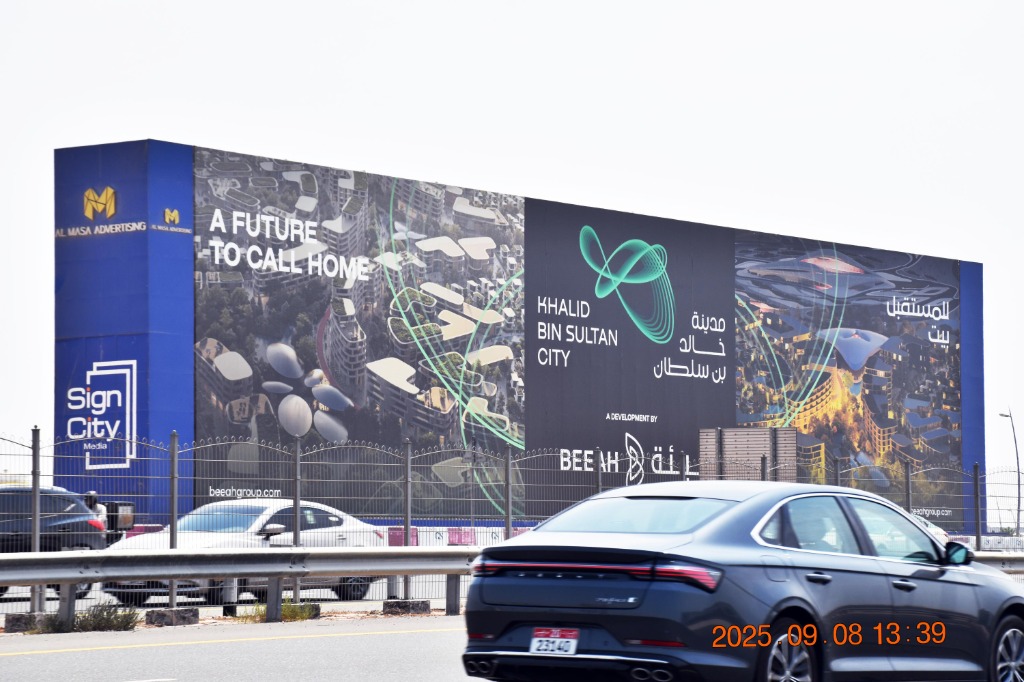
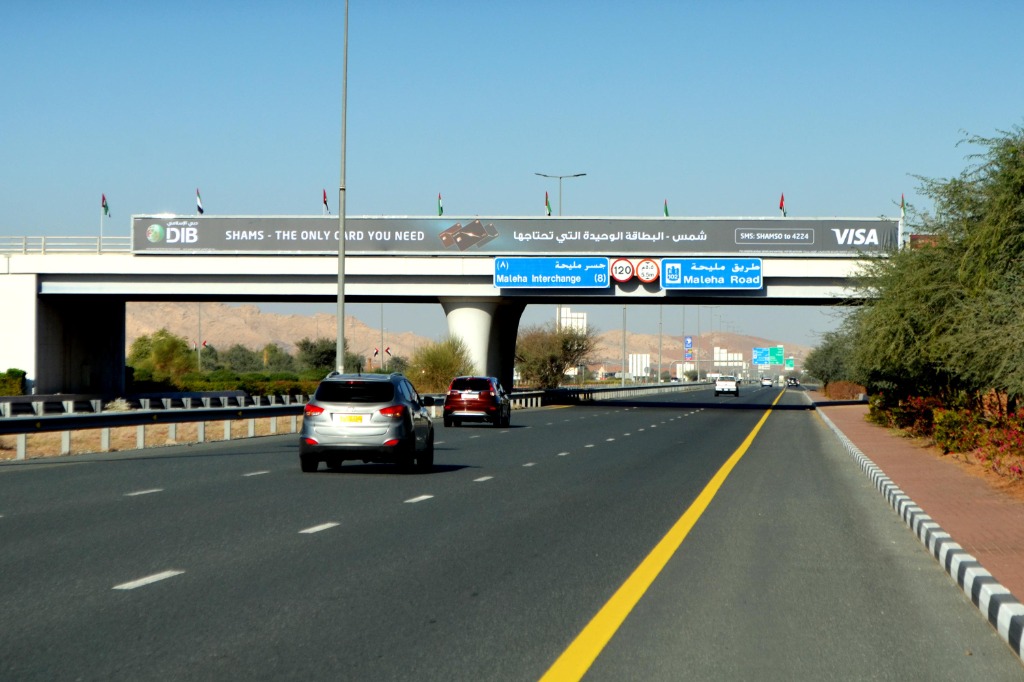
Book a static hoarding or unipole and you have every second of that face for the whole flight. Nobody else appears on it. A driver who looks up sees your brand, on every pass, for the full booking period.
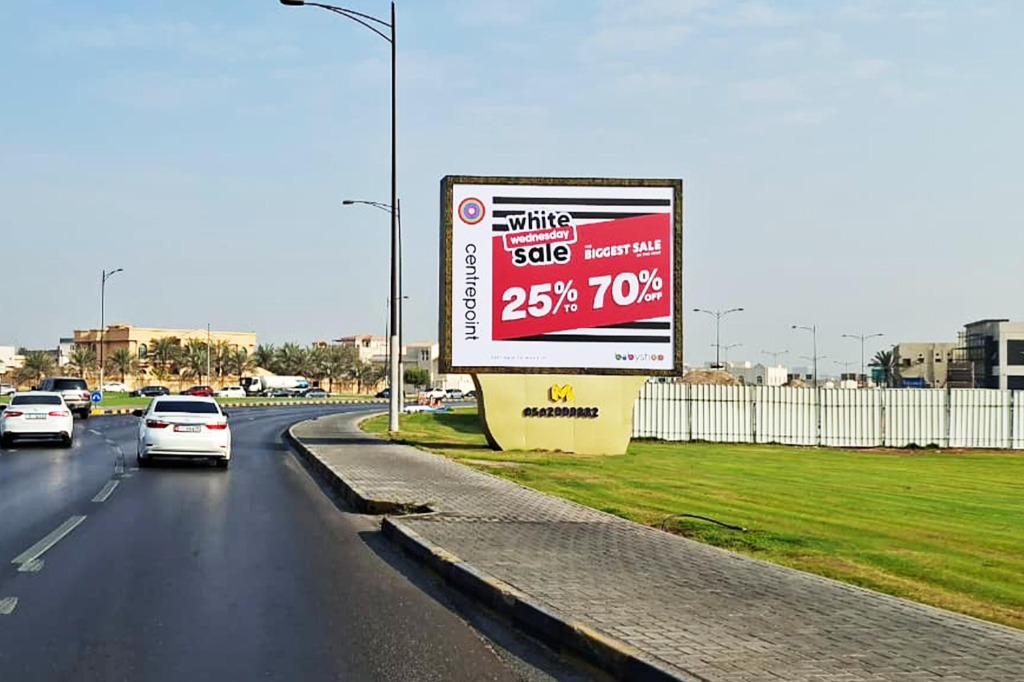
Book a digital screen and you are buying a slot inside a rotation. A real example from our own network: the LED screen on Sheikh Zayed Road near the Dubai World Trade Centre and the Museum of the Future runs a 10-second slot every 90 seconds. That is nine slots in the loop, so your share of screen time is about one ninth, which works out at roughly 40 plays an hour for every hour the screen runs.
Neither model is better. They answer different questions. If the campaign needs a landmark that belongs to you alone for six weeks, static does that and digital cannot. If it needs the message to change on Thursday afternoon, digital does that and static cannot.
What digital actually gives you
- Changeable creative. A new file replaces the old one. No reprint, no crane, no installation window.
- Dayparting. One message for the morning commute, another for the evening return.
- Motion. Movement earns attention in a way a printed sheet cannot, which is why motion graphics is a service in its own right and not an afterthought.
- Short flights. A weekend activation or a three-day launch is practical on a screen and awkward in print.
What static still does better
- Uncontested presence. The face is yours. There is no loop and no share of voice to calculate.
- Scale. Screens are physically limited; static is not. The Flag Island site on Khalidiya Street in Sharjah is 180 metres wide, and Umbrella Beach in Fujairah runs to 200 metres. No screen in this market comes close to that surface.
- Cost behaviour over long flights. A three-month static booking does not multiply the way loop-based pricing does.
- Frequency. Repetition along a corridor comes from lamppost runs and several structures on the same road, not from one screen.
Our digital inventory
Al Masa operates 22 LED screens. Three of them are published on our locations map with full specifications, and they show the range of what the network covers:
- Sheikh Zayed Road, at Dubai Eye, DWTC and the Museum of the Future: 30m x 10m, a 10-second slot every 90 seconds.
- Al Ittihad Road, Al Nahda and Al Mulla Plaza, Dubai: 14m x 6m.
- Al Bustan, Abu Dhabi: 4.8m x 10.56m, a 10-second slot every 90 seconds.
Each one, with its position on the map, is on the Dubai LED screen page and the Abu Dhabi LED screen page. For the rest of the network, tell us the emirates and the audience, and we will send the screens that fit, with their sizes and slot lengths.
How most good UAE plans resolve
They use both, for different jobs. The screen carries the message that changes: the date, the offer, the countdown. The static structures carry the message that must not move, on faces large enough to be unmissable. A unipole on the approach and a screen at the landmark are not competing purchases. They are two halves of the same idea.
Tell us the objective, the window and the emirates that matter, and we will come back with the split rather than a preference.