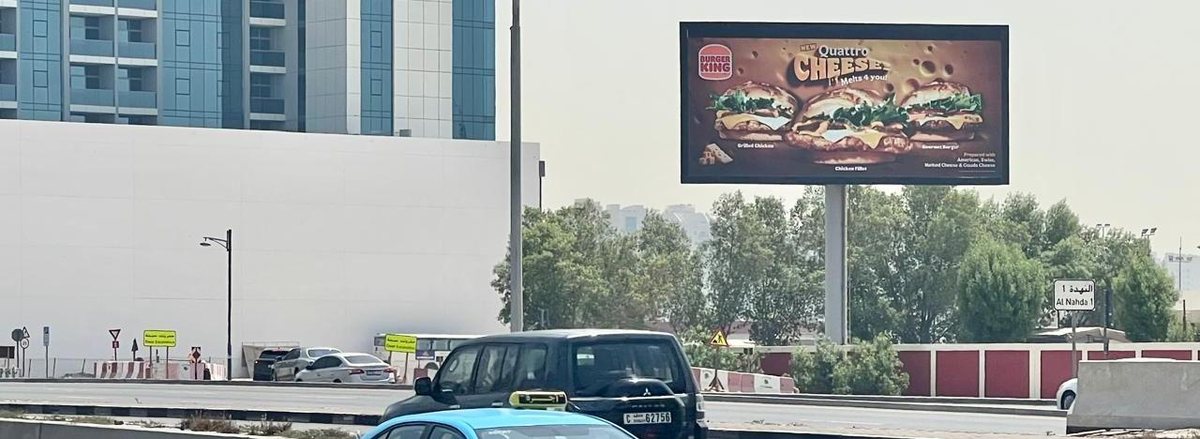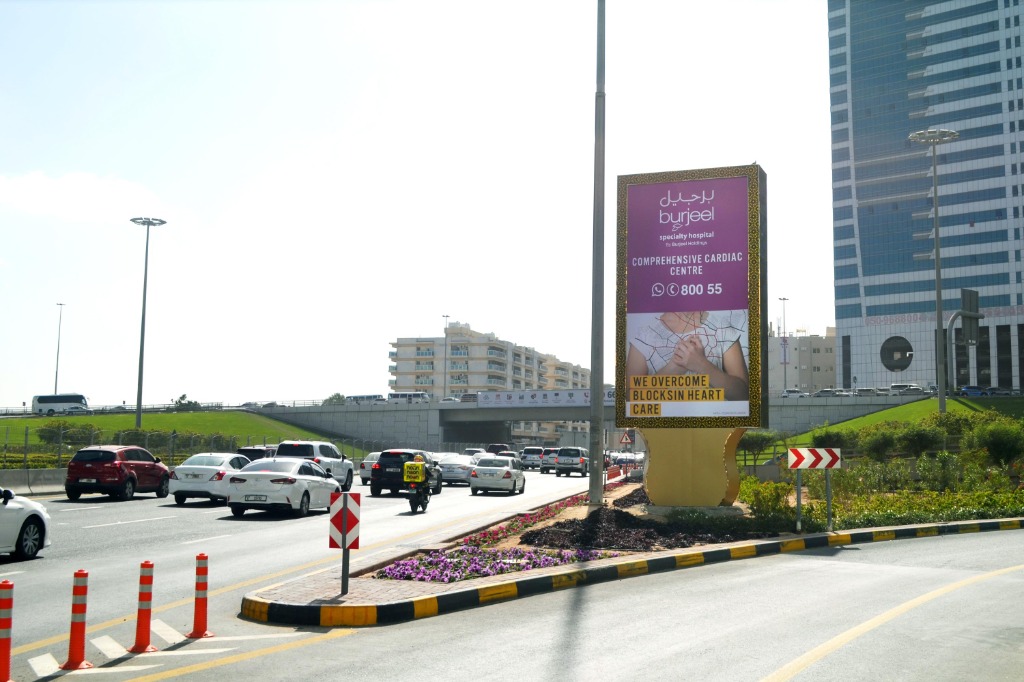

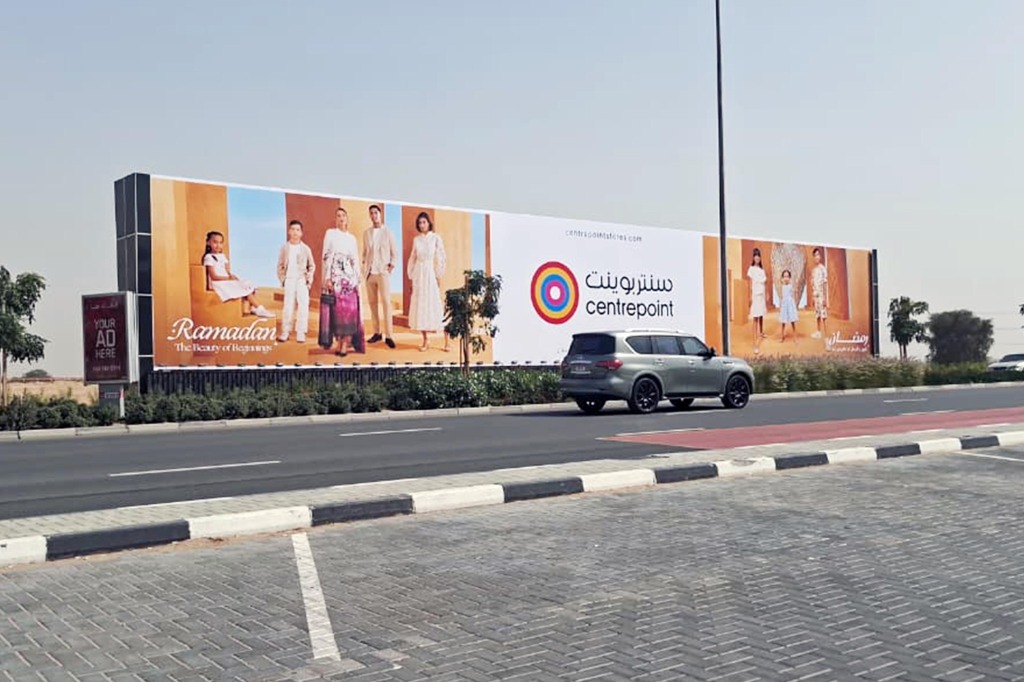
Every outdoor advertisement in the UAE needs permission before it goes up, and outdoor advertising permits in the UAE are not issued as one universal document. Approval typically involves the authority responsible for the road or area, the owner of the land or building, and a review of your artwork. The details differ by emirate and by authority.
This guide explains the shape of the process so you can plan for it. It does not quote fees, timeframes or clause numbers, because those change and depend on the site. For any specific location, check with the relevant authority or ask the company that owns the site to confirm the current requirements.
Why one campaign can need several approvals
A single poster on a single wall can be covered by more than one decision-maker. The question “may we advertise here?” splits into smaller questions, and different bodies answer each one.
Depending on the site, the relevant authority might be, for example, the RTA in Dubai for sites along roads it manages, or the Department of Municipalities and Transport in Abu Dhabi. Other emirates have their own municipalities and departments. Always check with the relevant authority for your site rather than assuming the rules next door apply.
Responsibilities can also overlap. A site may sit on land owned by one party while the road beside it is regulated by another. In that case each party must agree separately, and approval from one never substitutes for the other.
Who decides what: a quick map
| Question being asked | Who typically answers it |
|---|---|
| May an advertising structure stand or hang at this location? | The authority responsible for the area, together with the landowner |
| Is the structure safe, and is it installed correctly? | The authority, drawing on technical and engineering requirements |
| Is the content acceptable? | The authority or a content-review body, depending on the emirate |
| Do we have the right to use this wall, roof or plot? | The building owner or landlord |
| Does the product category carry extra rules? | The sector regulator, where one applies |
Seeing the process this way explains why delays often come from the party you are not talking to. A strong artwork approval does not help if the landowner has not yet agreed.
The stages of approval, in order
Although the sequence varies, most outdoor campaigns pass through the same stages. Knowing them lets you ask the right question at the right time.
- Site confirmation. Choose the exact face and confirm it is available for your dates.
- Ownership and landlord consent. Confirm who may grant space on that structure or building.
- Artwork submission. Send the proposed design, in the format the authority asks for, for content review.
- Technical review. For new structures, wraps or anything involving work at height, technical drawings and method details may be needed.
- Authority permission. The authority issues its decision, sometimes with conditions attached.
- Installation and inspection. The work is carried out within the conditions, and the result may be checked.
- Display and maintenance. The artwork stays in good condition for the booking period and is removed at the end.
Stages do not always have to wait for each other. Site confirmation and landlord consent can often run side by side, and technical documents can be prepared while the content is under review, as long as everyone knows who owns each step.
What happens when the structure is already approved
If you book a face on an established structure, the structure itself has usually been approved already, and the main steps left are your artwork and your dates. This is the simplest route and one reason many advertisers choose existing hoardings and unipoles over bespoke builds.
Al Masa owns and operates its own network in all seven emirates, and we handle approvals for our own sites. That means a client booking one of our faces does not have to chase separate authorities; we manage that step and tell you what we need from you. You can see where our network operates on the locations page.
What changes by emirate
The rules, forms and review bodies are not identical everywhere. A campaign that spans several emirates should be planned as several approval processes that happen in parallel.
- A campaign in Dubai may involve different bodies and formats from one in Abu Dhabi.
- Northern emirates such as Sharjah have their own municipal arrangements.
- Temporary formats, such as bridge banners and wraps, can follow a different path from permanent structures.
- Content standards may be applied differently, so a design approved in one place is not automatically approved in another.
Why approvals stall, and how to avoid it
Most delays are preventable. They tend to come from the same few causes, and almost all of them trace back to information supplied late or incomplete.
- Late artwork. The design is finished only days before the planned start, leaving no room for a revision request.
- Content that needs changes. Wording, imagery or claims that the reviewer asks to adjust. Keep the message simple, and avoid claims you cannot support.
- Missing documents. Company details, licences or authorisation letters not ready when requested.
- Unclear scope. The brief changes mid-process, for example a new size or an additional location.
- Assuming a repeat. Reusing artwork from a previous campaign without checking that the rules have not changed.
A good brief helps here. Our guide to how to brief an outdoor advertising agency lists the details that prevent most of these problems.
How to plan your timeline around approvals
Treat approval as part of the schedule, not a formality at the end. Work backwards from the date you want to appear, and place the artwork deadline early enough to absorb one round of changes.
- Fix the site list first, because the approval route depends on the location.
- Submit a near-final design, not a rough draft.
- Ask your supplier what the authority needs in writing, and gather it at the start.
- Build a buffer for the formats that involve work at height or a new installation.
- Keep a reserve site in mind in case a first-choice location is not approved.
Finally, agree with your supplier who speaks to each authority and where feedback will be collected. Several points of contact lead to lost documents and repeated questions, which slow campaigns more than almost anything else.
Common questions about advertising permits
Can I put up a banner on my own building without permission?
Do not assume so. Even on your own property, signage and wraps usually fall under rules from the relevant authority. Check before you print.
Do I apply myself or through an agency?
You can do either, but a supplier that owns the site and handles approvals removes a step. Our FAQ page covers other common questions.
Do digital screens follow the same process?
They can differ, because a screen shows changing content and the review may cover the full plan for what will be displayed, not a single design. Ask the relevant authority or the screen operator what is required.
Does the cost of approvals appear in a quote?
It should be clear whether it does. See how quotes are built in our article on billboard advertising cost in the UAE.
If you have a site in mind and want to know what it will take to get it approved, ask the Al Masa team and we will explain the steps for that location.