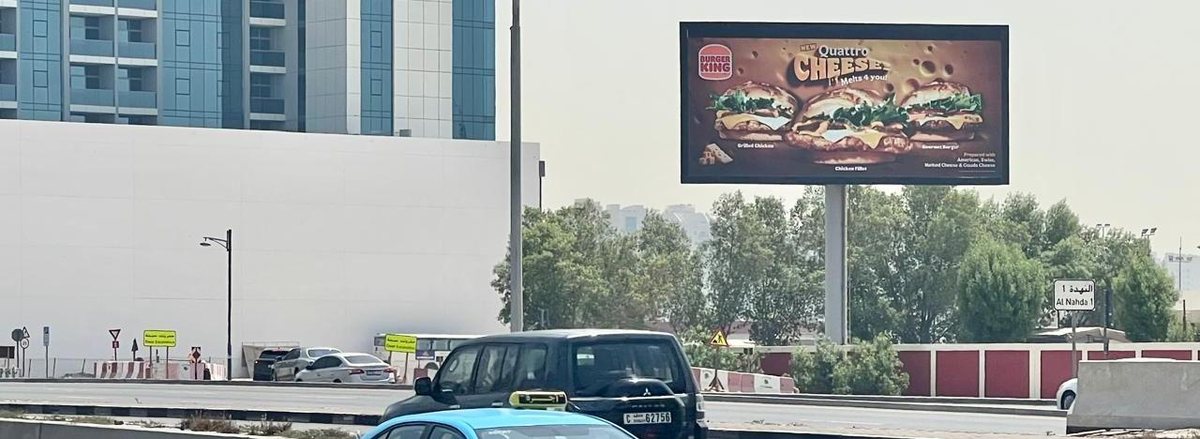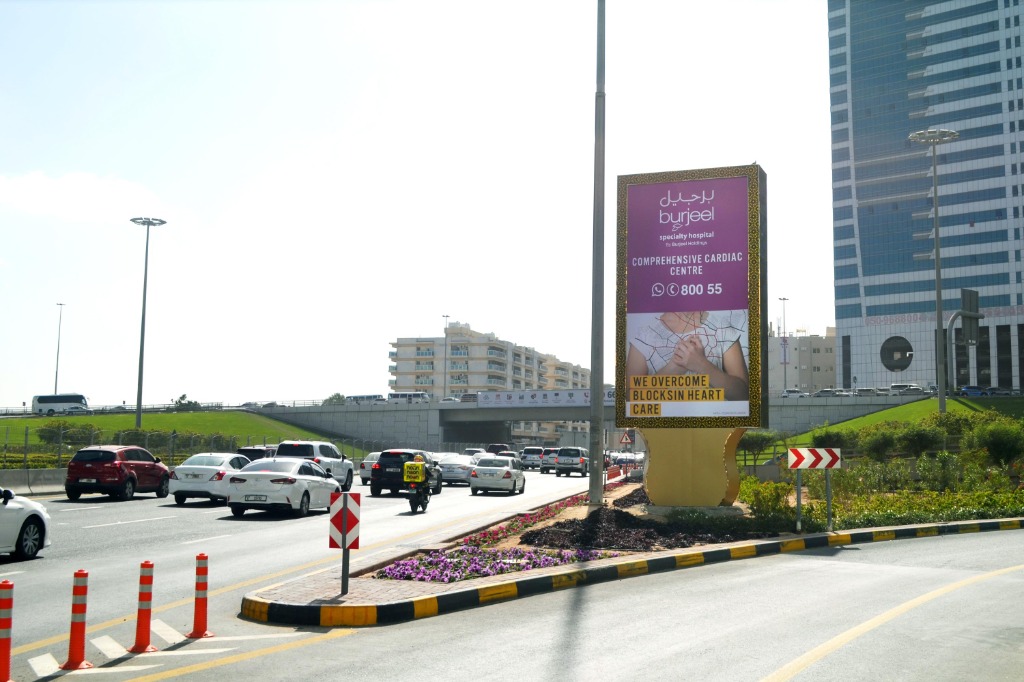

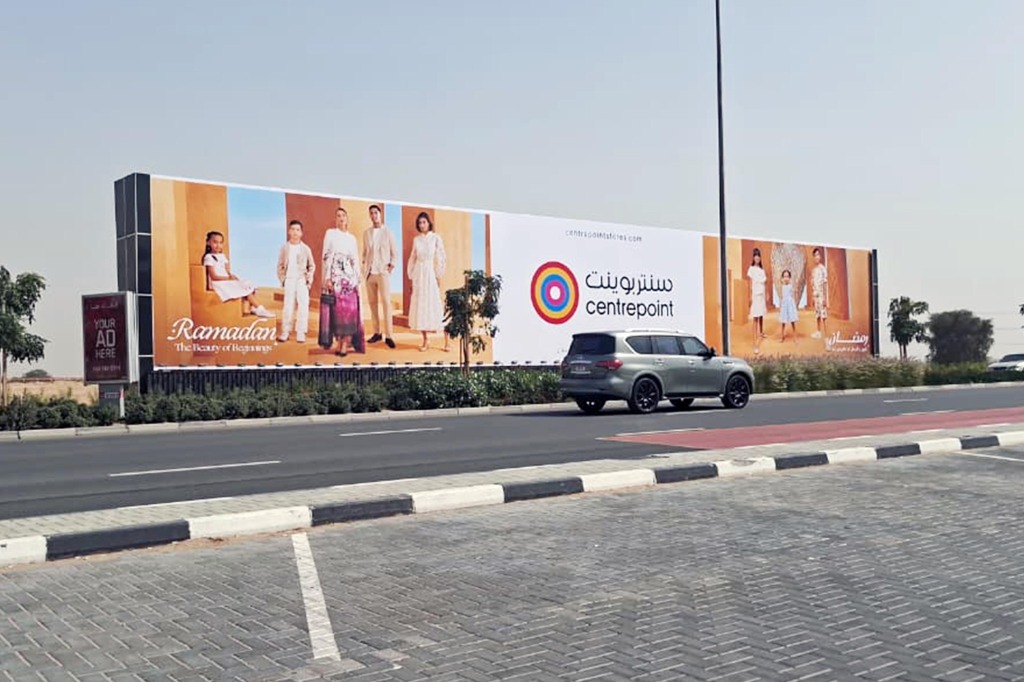
What is OOH advertising? OOH stands for out-of-home: any advertising that reaches people while they are outside their homes, on the road, in transit, on the street or inside a venue. Billboards are the best-known example, but the category is wider than any single format, and most of the confusion about it comes from treating it as just one thing.
This explainer sets out what OOH includes, how its formats group together, and then takes the five myths we hear most often, so that you can judge for yourself where it fits in a plan.
Out-of-home in one idea: reaching people on the move
Most media reach people in a private setting: a phone in the evening, a television in the living room. OOH is different because it is part of the physical world. People encounter it as they travel to work, walk to a shop, wait for a lift or sit in traffic, and they do not choose to see it; it is simply there.
That has two consequences. The message has to work in a glance, because nobody has agreed to give it more. And it has to earn its place by being relevant to where it stands, which is why choosing the location is as important as writing the message.
The main families of OOH formats
It helps to sort formats into families rather than memorise a long list. Our overview of the types of outdoor advertising in the UAE goes deeper; the short version is:
- Roadside structures. Hoardings, unipoles and megacom structures along roads, designed to be read from vehicles.
- Over-road and street formats. Bridge banners and lamppost advertising, which place a message at or above eye level along a route.
- Building and facade formats. Wraps and glass facade branding that turn a building itself into a message.
- Transit and mobile formats. Taxi and vehicle branding, which carry a message through the city.
- Place-based formats. In-mall branding and similar installations inside venues where people spend longer.
- Digital formats. LED screens that can change the message through the day. Digital out-of-home has its own explainer: what is DOOH advertising.
Myth 1: “OOH just means billboards”
Billboards are one part of OOH, not the whole. A campaign might use large roadside structures to announce, lampposts to repeat, a building wrap to make a statement, and in-mall screens to prompt action. Planning only for billboards means ignoring half of the toolkit, and often the half that suits the goal best.
The right question is not “do we want a billboard?” but “where will our audience be, and what format suits that place?”.
Myth 2: “OOH cannot be targeted”
OOH is not targeted at individuals, and nobody should claim otherwise. What it offers is targeting by place, route and moment. A road chosen for commuters reaches commuters; a position near a business district reaches office workers; a screen in a mall reaches shoppers.
That is a different kind of precision, based on where people go rather than who they are, and it has a big advantage: it does not depend on tracking anyone. The skill lies in choosing locations that match your audience’s routines, and in understanding the difference between reach and frequency so you know whether you are meeting many people once or the same people many times.
Myth 3: “You cannot measure OOH”
You cannot measure it the way you measure a click, but you can assess it. Teams look at things like branded searches during the campaign, enquiries that mention the message, visits to a store or a landing page created for the campaign, and differences between areas where the campaign ran and areas where it did not.
The key is to decide in advance what success looks like and to build one simple way of seeing it. Our guide on how to measure outdoor campaign effectiveness walks through that process without overstating what any single method can show.
Myth 4: “Digital has replaced it”
The two do different jobs. Digital channels are strong at responding to people who already show interest; OOH is strong at putting a brand in front of people who were not looking for it, and at making a brand feel present in the places people know. Used together, they strengthen each other: someone who sees your name on a road may search for it later.
That is why it is more useful to think about how the channels complement each other than to ask which wins. If you want to go further, read how outdoor advertising complements digital marketing.
Myth 5: “Bigger is always better”
Size helps, but only when the message is simple enough to use it. A very large board with too much text is harder to read than a modest one with a single idea. Position, angle, light, surroundings and the length of time a person can look at it often matter more than the dimensions of the face.
Think of size as a tool for distance. A bigger face lets people read from further away, which is valuable on fast roads. On a slower street or inside a venue, smaller and closer can be more effective.
When OOH is a good fit, and when it is not
Being honest about limits makes a plan stronger. OOH tends to suit brands that want to be seen in the places where their customers live and travel, that have a message simple enough for a glance, and that can give a campaign enough time to build familiarity.
- A good fit: launches, brand awareness, reminders for well-known products, announcements of an event or a location, and local campaigns tied to a district or route.
- A weaker fit: messages that depend on long explanations, offers that need to change by the hour on a fixed face, or goals that require a direct response from one named person.
For those weaker cases OOH can still play a supporting role by creating the awareness that makes other channels work harder. The point is to give it the job it does well, not to ask it to do everything.
How an OOH campaign usually comes together
A typical campaign follows a short sequence. You define the audience and the goal, choose formats and locations that fit, confirm availability, handle approvals with the relevant authority, finalise artwork to the structure’s specification, print, install and then maintain the faces throughout the booking. At Al Masa we own and operate our network across all seven emirates, print in-house and install with our own crews, so a single team can carry a campaign from the first conversation to the last day on site.
If you are exploring outdoor for the first time, talk to Al Masa about your OOH plan and we will help you work out which formats and locations suit your audience.