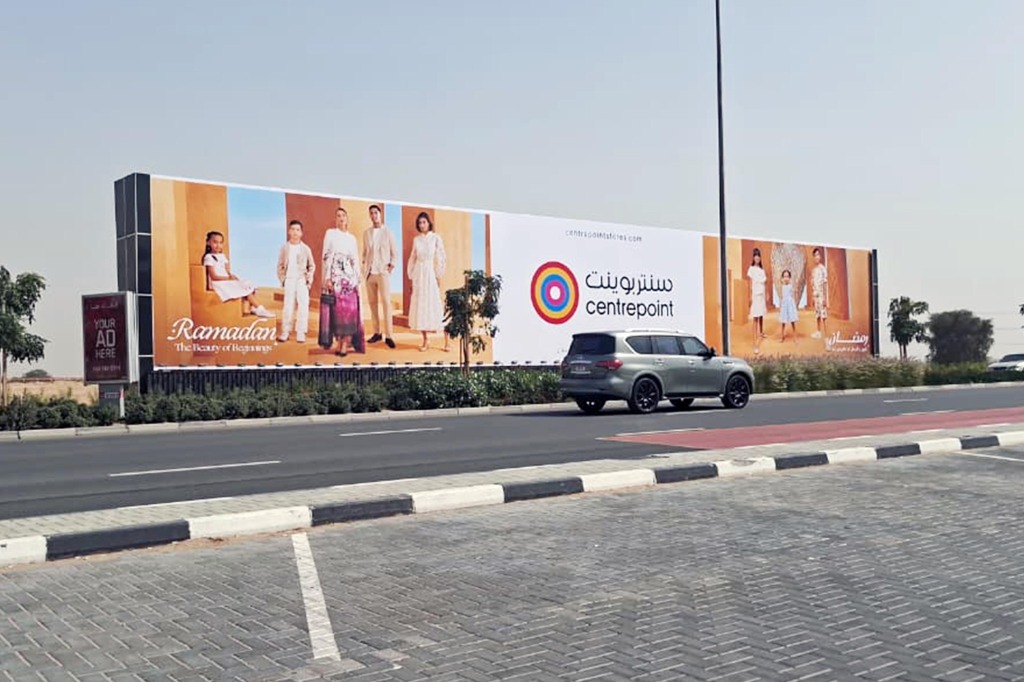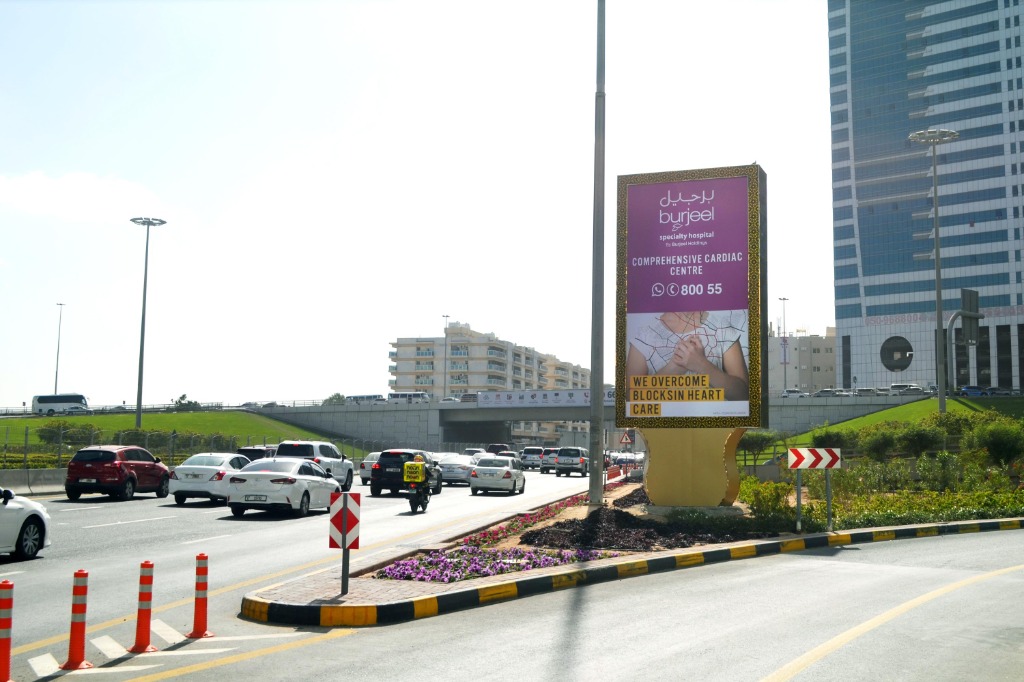

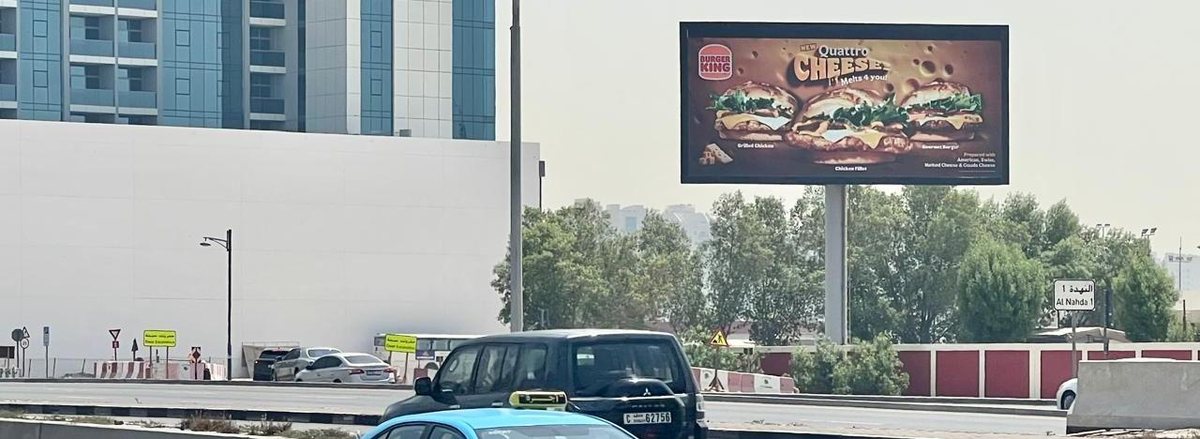
What is DOOH advertising? DOOH means digital out-of-home: screens in public places that show advertising content which can be changed, scheduled and sequenced without anyone climbing a structure to replace a printed face. It uses the same locations as traditional outdoor media, such as roads, malls and building frontages, but swaps fixed vinyl for a display.
The easiest way to understand what that changes is to follow one screen through a day. The rest of this article does that, then covers what DOOH is good at, what it is not, and how to approach a booking.
One day in the life of a screen
Imagine a large LED screen beside a busy road. It does not show the same thing for twenty-four hours, and it should not, because the people passing it change with the clock.
Morning commute
Traffic is heavy and drivers are heading to work. The audience is mostly commuters in a hurry, so content works best when it is short and clear: a brand name, a single line and a clean image. A coffee brand or a bank might choose this slot to run a simple awareness message.
Midday
The road is quieter, and the people around the screen are more varied: deliveries, errands, visitors. This is a good time for messages about lunch offers, services or places to visit, because the audience is closer to a decision about what to do next.
School run and late afternoon
Families and shift changes fill the road. Content aimed at households, such as retail promotions, entertainment or education, can find its audience here, while a corporate message may suit another slot better.
Evening
Journeys home and trips to shops, restaurants and leisure venues begin. People are more relaxed, and screens near these areas can carry events, openings and weekend plans. When darkness falls, a lit LED face stands out more strongly than it does at midday, so contrast and brightness behave differently.
Late night
Traffic thins and the audience becomes a smaller, more specific group. Many advertisers reduce or change content here. Whether to use the slot depends on whether those specific people matter to your goal.
The point of this timeline is that one location can serve several audiences in sequence. That flexibility is the core of DOOH, and it is why the same screen can be valuable to advertisers with very different goals.
What a digital screen can do that a printed face cannot
- Change the message without reinstalling. A new offer or event can replace the old one on the screen, subject to the booking terms.
- Run different content at different times. The morning message and the evening message need not be the same.
- Tell a short sequence. A few frames in order can build an idea that a single image cannot.
- Add movement to attract the eye. Used lightly, motion helps a message stand out on a busy road.
- Link content to context. Depending on the set-up, messages can be matched to the time of day or conditions; see contextual DOOH using time and weather for how that works.
What DOOH does not do
It helps to be plain about the limits. A screen on a road is not a personalised ad for the individual in the car; it reaches whoever is there. Many screens also show several advertisers in turn, so your message appears for part of each cycle rather than continuously. That is efficient, but it means your content must make its point in the time it has, and the effect of repetition builds across many passes rather than one.
A printed face, by contrast, is always visible, so people get a longer total exposure to the same message. Which is better depends on the goal. Our comparison of static billboards and digital screens sets out the trade-offs in more detail, and OOH versus DOOH helps you decide when to combine them.
How a DOOH booking works, step by step
- Choose screens by audience, not size. Where the screen is and who passes it matter more than the dimension of the display.
- Understand the loop. Ask how long a content cycle is, how many advertisers share it and how long your message appears each time.
- Pick the times that suit your audience. Decide whether you want the whole day or selected periods.
- Prepare content for the format. The artwork or video must meet the screen’s resolution, aspect ratio and file requirements.
- Handle approvals. Rules differ by emirate and by authority, so confirm what applies; for our own screens, Al Masa handles approvals.
- Agree what reporting you will receive. Ask what information is available about when your content played.
Creative rules that suit screens
Good DOOH content is built for glances, like any outdoor creative, but with some extra considerations because it moves and shares a loop.
- Make the first frame work on its own, since a passer-by may see only part of the sequence.
- Keep movement simple. Quick cuts and busy transitions lose a driver’s attention faster than a calm animation.
- Use strong contrast and large type, because screens glare in sunlight and look different at night.
- End on the brand name so the last frame carries the message.
- Test the content on the actual screen, not only on a laptop.
Questions about a first DOOH campaign
Do we have to use video?
No. A well-composed still image can work on a screen, and many advertisers start there. Add movement only when it helps the message, such as revealing a product or showing a change, and keep it simple.
Can we change the content during the campaign?
That is one of the main reasons to choose digital. The practical limits are the booking terms, the approval of new content and the time needed to prepare files in the right format, so plan the changes in advance rather than at the last minute.
How many messages should we run?
Fewer than you think. One strong idea in a few variations, matched to times of day, usually beats a crowd of unrelated messages. A passer-by will remember a single line far more easily than a list.
How to decide if DOOH is right for you
Ask three questions. Does your message change through the day or by event? Do you want to speak to different audiences at different hours? Do you need to be able to update the campaign without a physical installation? If the answer to any of these is yes, digital is worth serious consideration. If you want continuous presence for a single message, a printed face may serve you better, and many campaigns use both. Our digital OOH and LED screens pages describe what we offer, and what is OOH advertising gives the wider picture.
If you would like to explore options, talk to Al Masa about digital out-of-home and tell us what you want your screen content to do.