
A planner receives two quotes for the same road: one for a printed board, one for a slot on a digital screen. The numbers look comparable, which is exactly why the decision stalls. OOH vs DOOH is not a contest between old and new. Traditional OOH gives you one message that is always on, and DOOH gives you a changing message that shares the screen with other advertisers.
This guide is written as a decision tool. It explains the two in plain terms, then puts five questions to your campaign, and finishes with two hypothetical briefs showing how the answers can differ. If you prefer the underlying definitions first, our explainer on what DOOH advertising is covers them.
OOH vs DOOH in plain terms
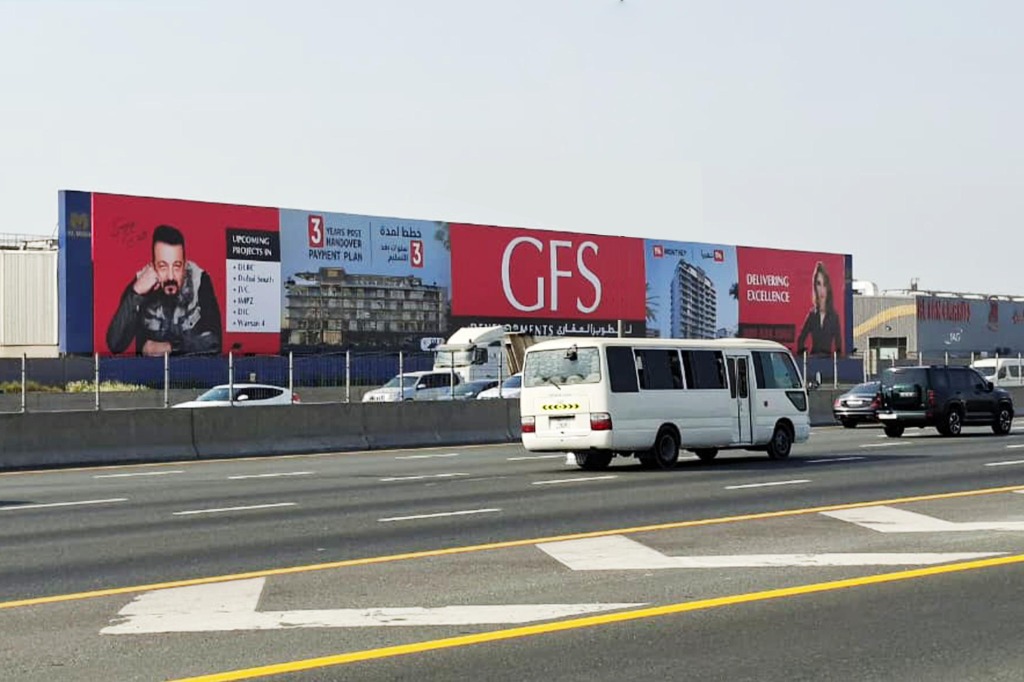
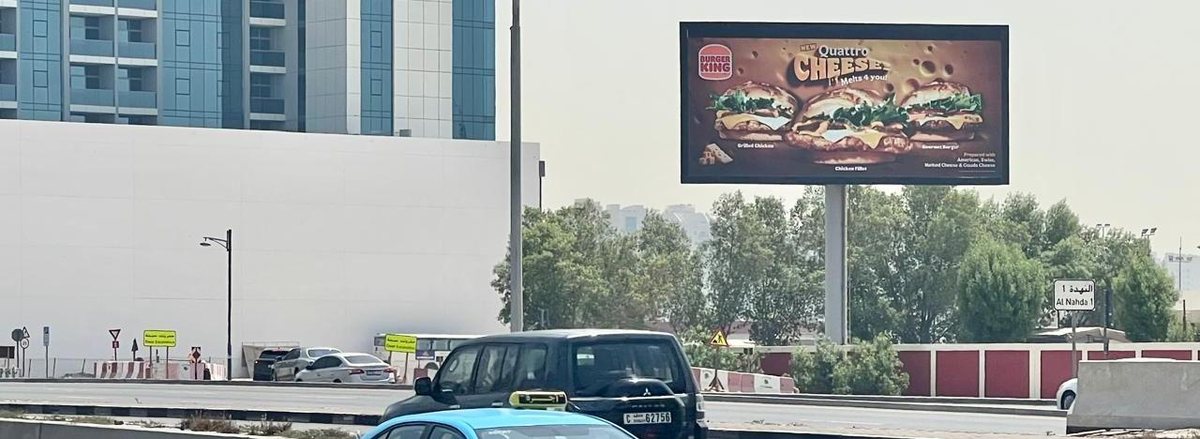
OOH, or out-of-home, covers every advertising format people meet outside their homes. Traditionally that means printed artwork on a fixed structure. DOOH is the digital branch of the same family: screens that display video or animated artwork and can switch messages by schedule.
| Question | Traditional OOH | DOOH |
|---|---|---|
| How is the message shown? | Printed, fixed, always visible | On a screen, usually in a rotating loop |
| Who shares the space? | Usually only you for the booking period | Other advertisers, depending on the loop |
| How quickly can it change? | Needs reprinting and a site visit | Can be swapped remotely |
| What does the creative need? | One strong still image | Content built for movement and timing |
| What drives the effort? | Printing and installation | Content production and scheduling |
Where traditional OOH is the stronger choice
Printed formats earn their keep when you want presence more than flexibility. A message that never leaves the site builds familiarity through sheer repetition, and nobody has to wait for their turn in a loop to see it.
- Brand building: one confident message, seen again and again by the same commuters.
- Landmark moments: a launch or opening that deserves a dominant structure on the approach road.
- Long fixed campaigns: when the message will not change for weeks, reprinting is not a concern.
- Scale: structures such as unipoles give height and a clean frame that screens in some locations cannot match.
Where DOOH earns its place
Digital screens justify themselves when the message needs to move with the situation. The screen is there anyway, so changing what it says costs a content update rather than a print run and an installation team.
- Offers that change: prices, availability or countdowns that would be out of date by the time a board is printed.
- Time-specific messages: breakfast in the morning, an evening event after work.
- Several messages from one advertiser: a sequence of short ideas that build on one another.
- Short bursts: a slot booked for a limited window without a full structure commitment.
Our LED screens and digital OOH pages describe what is available in each format.
Five questions that settle OOH vs DOOH
- Will your message change during the campaign? If it will, lean towards DOOH. If it will not, a fixed board loses nothing.
- Do you want to be alone in the frame? A printed site gives you the whole view. A screen gives you your turn.
- Is your creative built for motion? A static layout dropped onto a screen rarely uses it well. If you only have one still image, think about a printed format.
- How long does the campaign run? Longer runs spread the cost of printing and installation. Short runs can make screens more practical.
- Does the exact location matter more than the format? If the best site on your route has a screen, that may settle it. If it has a structure, the same logic applies in reverse.
Count which column your answers fall into. If you land in the middle, that is a signal to use both, which we cover below.
What changes in creative and production
The production work differs more than most briefs admit. For printed media, the effort is front-loaded: artwork, proofing, printing and installation all happen before the first day. Once the board is up, the work is inspection and maintenance. For DOOH, the effort is spread through the campaign, because content is scheduled, monitored and often refreshed.
The creative brief should say so explicitly. Printed work rewards a single idea that can be absorbed in a glance. Screen work can tell a short story, but only if every frame still makes sense for someone who sees only a few seconds of it. Our guide on static billboards versus digital screens goes deeper on those production details.
Mistakes that make the comparison misleading
Most poor OOH vs DOOH decisions come from comparing the wrong things, not from choosing the wrong medium.
- Comparing a full booking with one slot. A fixed site is yours for the whole period, while a screen slot is a share of a loop. They are different products, so the headline price tells you little on its own.
- Assuming digital means less work. Content still has to be designed, approved, scheduled and checked, and a screen that shows an outdated offer does more harm than a board that simply says less.
- Assuming print means no flexibility. Panels can be replaced during a booking if the plan allows for it, so ask about that before ruling print out.
- Choosing by novelty. A screen is not automatically more effective because it moves. If the message is simple and permanent, a still image on a good site is hard to beat.
Whatever the final choice, write down the reason for it in the brief. When the campaign is reviewed later, that note makes it much easier to judge whether the format did its job.
Two hypothetical briefs, two different answers
These are thought experiments, not case studies, but they show how the same question can resolve differently.
A developer announcing a new project
The launch date is fixed, the message is the project name and one line, and the goal is to make the name familiar across the city. This brief leans towards printed structures near the main approach roads, with a facade or hoarding on the site itself. The message does not need to change, so the permanence of print is an advantage.
A retailer running a changing weekly offer
The offer is different every week and the best sites are on routes into shopping destinations. This brief leans towards screens, since the content can change without anyone leaving the office. A printed structure may still support the brand name, but the offer itself belongs on a screen.
Using both without doubling the work
Many plans use printed media for the constant brand message and screens for the part that changes. The printed site anchors the campaign; the screen adds the timely detail. For this to work, the two should look like one campaign: shared colours, shared typography, a consistent line. Different teams producing each format separately is the most common reason they feel unrelated.
Al Masa works across both printed and digital formats, prints in-house and manages installation and maintenance during the campaign, so the creative can be planned once for both. If you are choosing between OOH and DOOH for a coming campaign, talk to Al Masa on our contact page and bring your dates, your areas and your draft message.