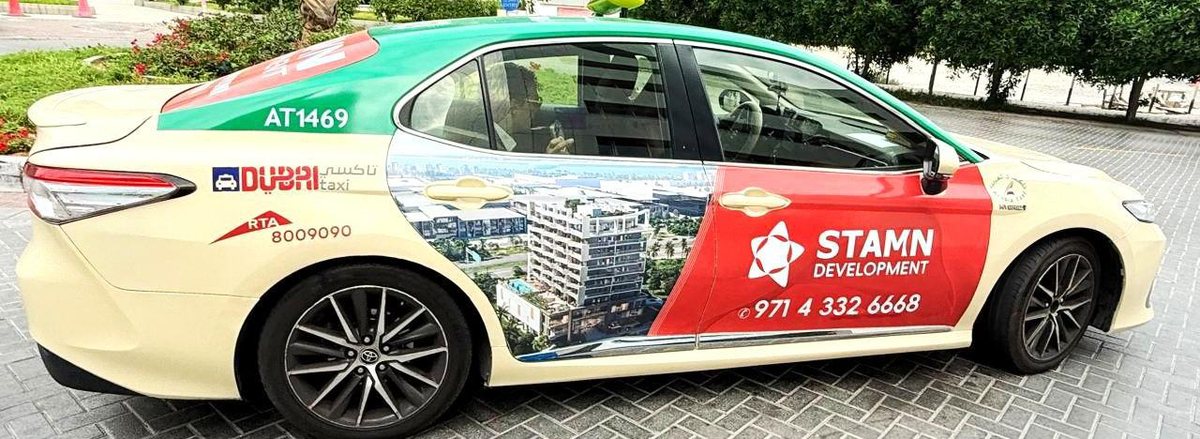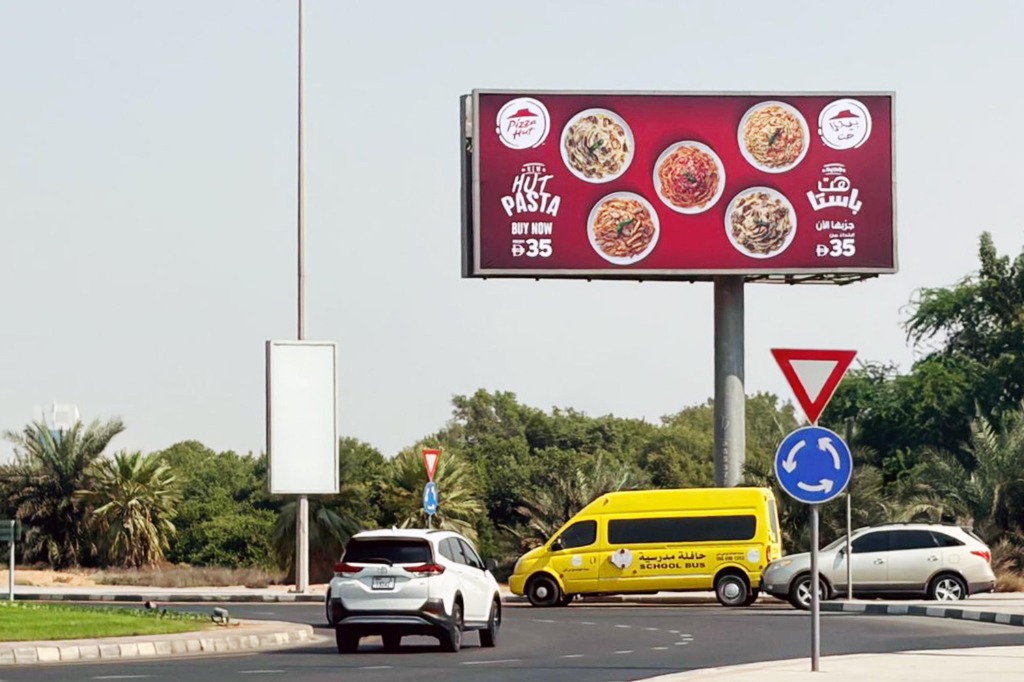

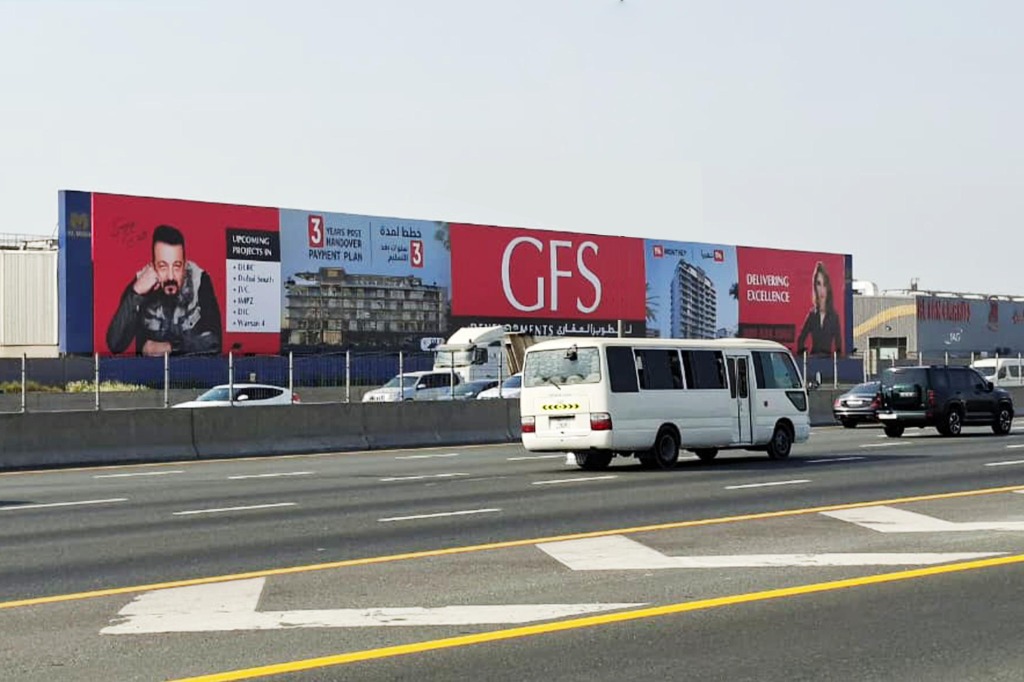
“We already run in Dubai, so can we copy the same plan for the capital?” It is the question we hear most from brands arriving in the capital, and the short answer is no. Advertising in Abu Dhabi follows a different road pattern, a different approval path and a different rhythm of the week, and a plan that ignores those differences wastes the budget.
This guide works through the questions marketing managers actually ask us before a first Abu Dhabi campaign, from who approves what to how the creative should sound.
How is advertising in Abu Dhabi different from Dubai?
The main differences are geography, approvals and audience habits. Abu Dhabi’s central area is an island linked to the mainland by bridges and causeways, so a large share of daily movement funnels through a small number of crossings. That is good news for planning: a handful of well-placed sites can touch a large part of the commuting audience, in a way that is harder to achieve in a city that spreads out along one long highway.
It is also the capital, with government entities, large corporations and a strong institutional presence. Campaigns tend to be read in that setting. A message that feels lively in a shopping district may need a calmer, more formal treatment when it sits beside government buildings or on a major approach road.
The week has its own pattern too. Weekday commuting and weekend leisure travel do not always use the same roads, so a site that looks ideal for office-bound drivers may do very little for families heading out on a Friday. Decide which of those two audiences matters more to your objective before you look at a single site.
Who decides what can go up?
Each emirate has its own authorities and its own rules, and Abu Dhabi is no exception. For advertising on or beside public roads, the relevant body is generally the Department of Municipalities and Transport, and you should check with the relevant authority before assuming anything from experience elsewhere.
The practical point is that approvals take their own course. We do not quote timeframes here because they depend on the site, the structure and the content, but we do advise brands to start approvals early and to avoid fixing a launch date before the site and design are cleared. On our own sites, Al Masa handles the approval process; our overview of outdoor advertising permits in the UAE explains the general logic, and the rest of this guide assumes you have a campaign date in mind that leaves room for it.
Which formats work best in the capital?
Format follows the audience route. On the main roads that feed the island and carry people between Abu Dhabi, the airport and neighbouring emirates, large faces such as unipoles and hoardings give drivers a longer approach in which to read the message. Where the road passes over or beside a crossing, a bridge banner can sit directly in the line of sight of every driver on that approach.
Inside the built-up areas, slower and more local formats make more sense. Lamppost advertising builds repetition along a street, and building signage or glass facade branding speaks to people who are already close to a destination. We run a network across all seven emirates, so formats can be combined: large faces for the headline, smaller ones for reinforcement.
Where does the audience actually move?
Do not guess the route; trace it. A useful way to plan is to list the journeys your customer makes in a normal week and mark the roads on each one:
- The commute. Where do people cross onto the island in the morning, and where do they leave it in the evening?
- The weekend run. Which roads do families use to reach shopping, beaches or leisure destinations?
- The inter-emirate drive. People who live in one emirate and work in another pass boards on both ends of the same journey.
- Arrivals. Visitors and business travellers arriving by air or road meet the city through its approach roads first.
A route that appears in three of those four lists is usually worth more than a famous site that appears in only one.
Does the creative need to change for Abu Dhabi?
Often it does, though less in layout than in tone. Check that the language, imagery and humour suit a more formal setting, that Arabic is given proper weight rather than being a cramped translation, and that nothing in the design could be read as careless in a government or cultural context. Our piece on bilingual Arabic and English billboard creative goes through how to share space between two languages without losing either.
If you advertise on behalf of a public body, keep the message plain and direct. Awareness campaigns in that setting succeed on clarity and tone, not novelty, and a headline that a reader can understand without any context is almost always the right headline.
Should we run Abu Dhabi and Dubai together?
Many brands do, and it can be efficient because the artwork can be adapted rather than rebuilt. The risk is treating them as one market. The roads, the approvals and the available structures differ, so each city needs its own site list even if the creative idea is shared.
A sensible approach is to lead in the city where your customers are concentrated, then extend. If you are starting with Dubai’s main highway, our Sheikh Zayed Road billboard advertising guide covers how to read a site on a busy corridor, and most of that thinking carries over to the capital’s main approaches.
How do we check the campaign is working once it is up?
Start with the physical check, then the business check. The physical check is simple: ask for photographs of each installed face, look at them at the time of day your audience passes, and make sure the artwork is sharp, complete and lit as expected. Faces are looked after during the booking, so report anything that looks wrong rather than waiting for the end.
The business check depends on your goal. A launch might be judged by branded searches or enquiries that mention the message; an offer might use a distinct phrase or page that only the outdoor campaign points to. Our guide on how to measure outdoor campaign effectiveness sets out realistic ways to do this without pretending a board can be tracked like a click.
How early should we start planning?
Earlier than feels necessary. Site availability, approvals, artwork, printing and installation all have to line up, and any one of them can move the date. In practice we suggest working backwards from the day you want the first board visible, leaving the approvals step as the least flexible part of the schedule.
The planning order is straightforward:
- Agree the objective and the audience routes.
- Shortlist formats and sites, then confirm availability.
- Submit for approval and, while that runs, finish the artwork to the exact specification of each structure.
- Print in-house, install with our own crews and confirm the result with photographs.
- Keep the faces in good condition through the booking.
If you are building a first capital campaign, talk to Al Masa about advertising in Abu Dhabi and we will help you choose routes and formats that fit your audience.