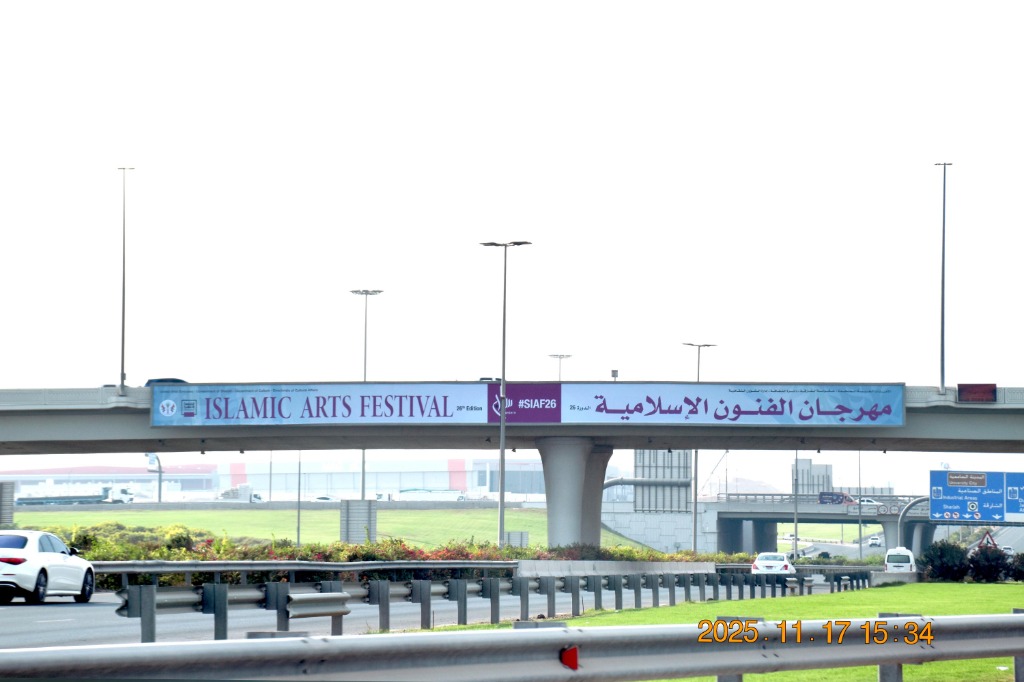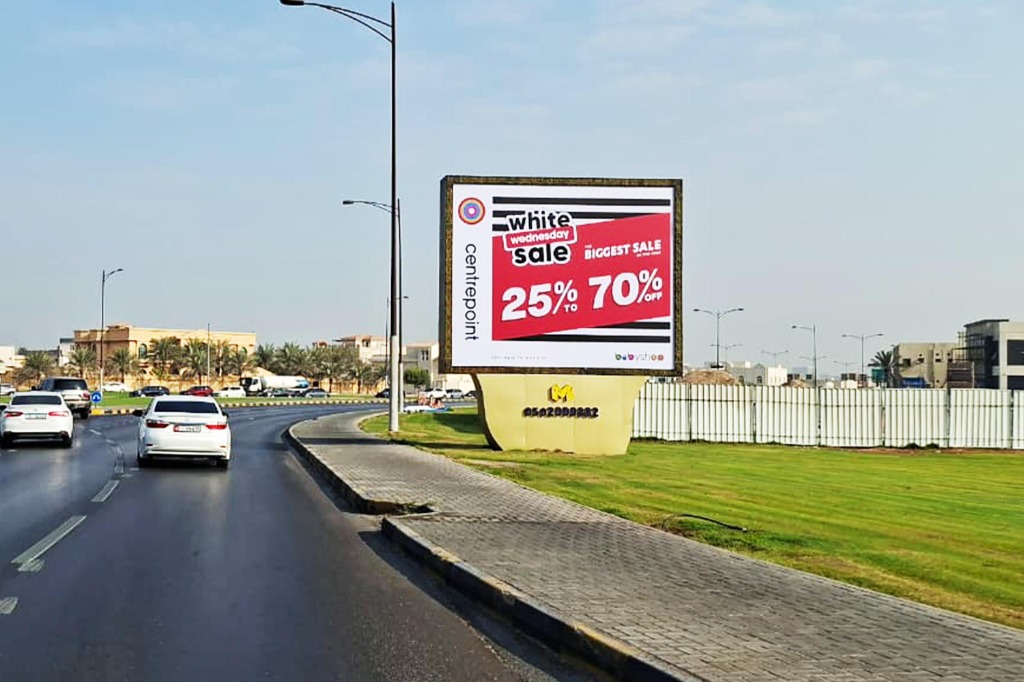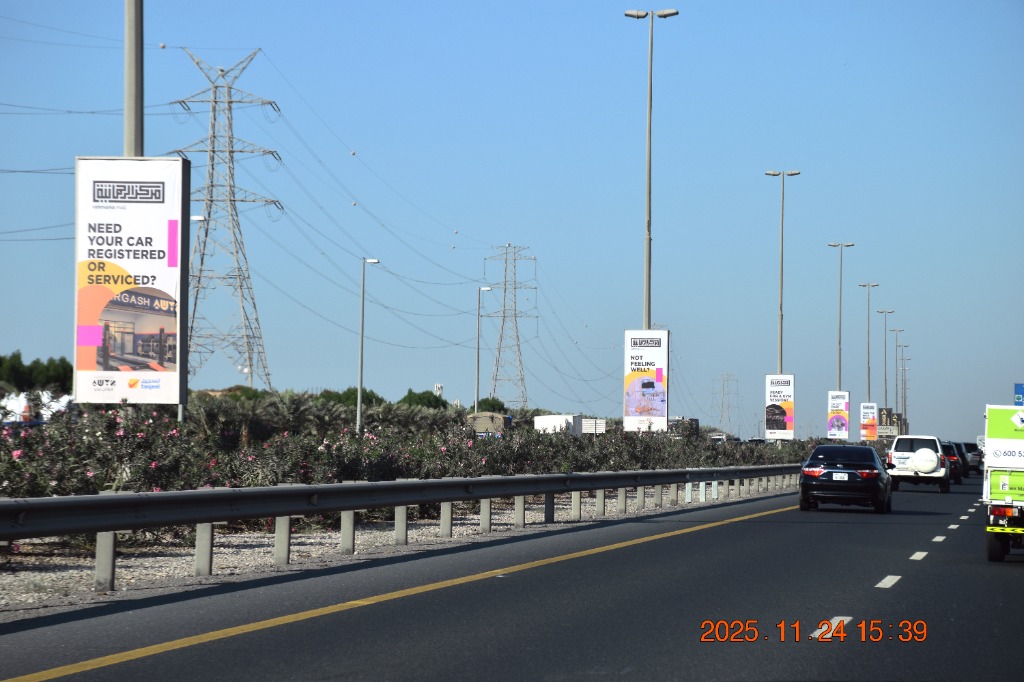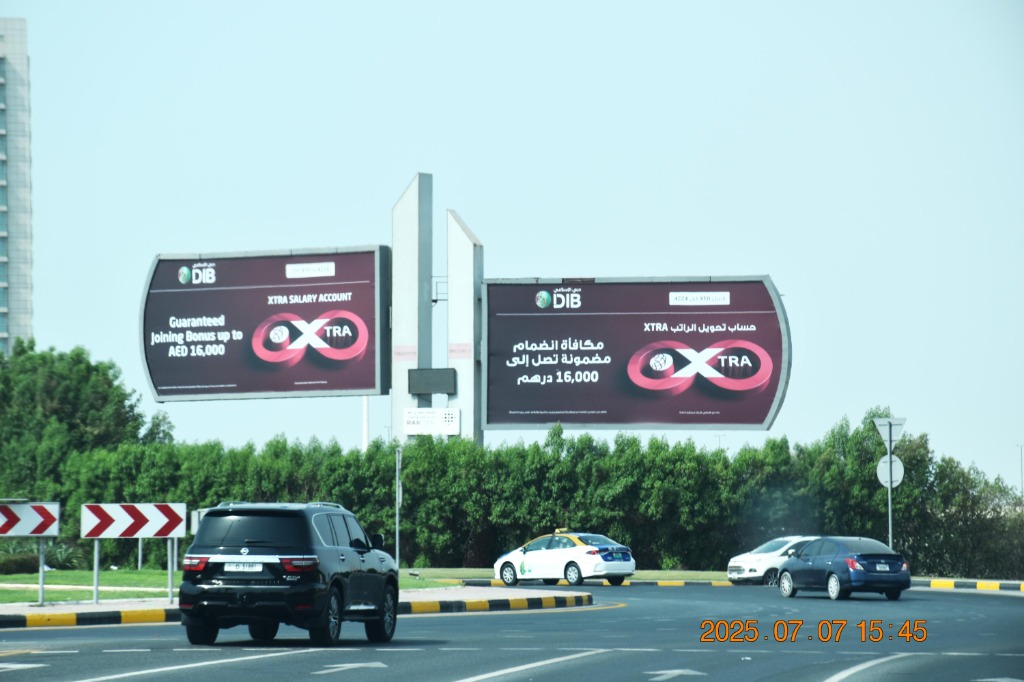
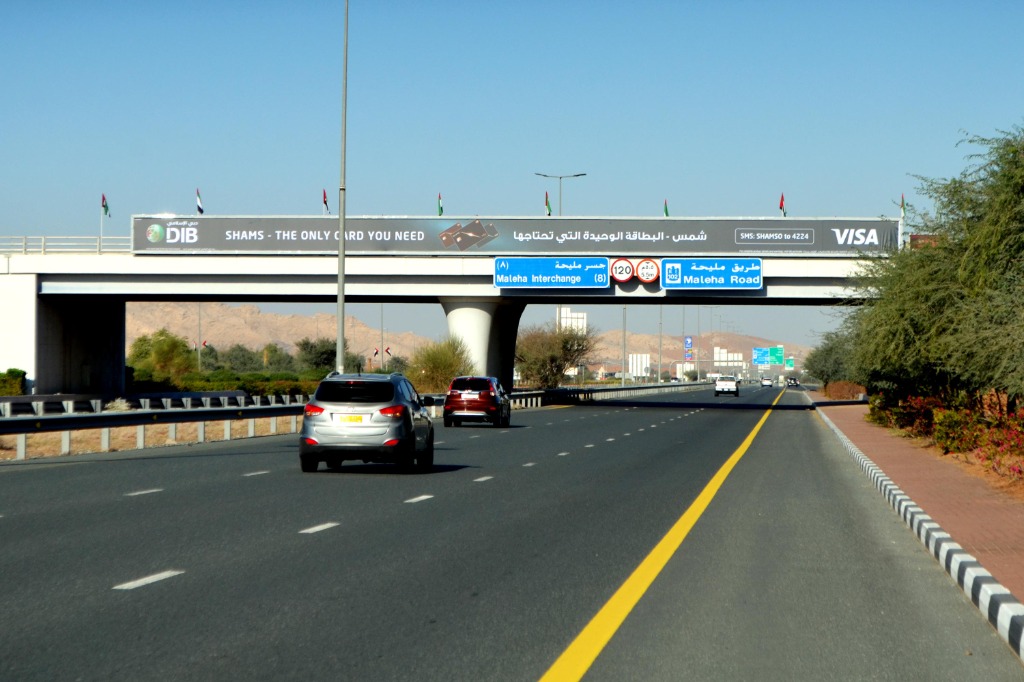
A bridge banner is the only common outdoor format that is read almost entirely by people travelling in one direction, at speed, with no choice about whether to look at it. That single fact should drive every decision about booking one, and it is the fact most briefs skip.
The same bridge is two different media buys
Al Masa carries banners on 36 bridges, and the published map lists them as 40 faces, because several bridges carry one banner for each direction of travel. Al Nahda Bridge appears twice: once for traffic going Dubai to Sharjah and once for Sharjah to Dubai. Maliha Road appears as Face A and Face B. Emirates Road at Al Shuhada in Ras Al Khaimah is listed once for DXB to RAK and once for RAK to DXB.
These are not two copies of one site. They are two audiences:
- Dubai to Sharjah, late afternoon: residents going home. Reachable again tomorrow, and the day after. Good for building recognition over weeks.
- Sharjah to Dubai, early morning: the same people heading to work, in a different frame of mind and with less patience for a complicated message.
- Toward an emirate border: visitors and through-traffic, who may see it once. Good for destinations, malls and events, weak for anything needing repetition.
Choosing the wrong face is not a small error. It is the difference between reaching people who live near your store and people who are driving away from it.
The shape of the format dictates the design
Bridge banners are wide and short. In our inventory the typical face runs 30 to 45 metres wide but under 3 metres high, and some are narrower still: several Sharjah banners are 1.8 to 2.3 metres high, while the widest, on Sheikh Mohammed bin Zayed Road at the Sharjah to Ajman border, reaches 100 metres.
That proportion is unforgiving. A layout built for a square frame will not survive it. What works:
- One line. Not a headline plus a subhead: one line.
- The logo at one end, the message running away from it, so the eye travels in the direction of the traffic.
- Type sized for the height, not the width. The height is the constraint.
- No phone numbers. Nobody memorises digits at 100 km/h. A brand name they can search later is worth more.
Our large format printing team can tell you before production whether a design survives the proportion, which is a cheaper conversation than reprinting.
Where the banners actually are
The concentration is in the Northern Emirates rather than Dubai: of the published faces, 15 are in Sharjah, 14 in Ajman, 9 in Ras Al Khaimah and 2 in Fujairah. That matters if you are planning for reach across the corridor between Dubai and the Northern Emirates, where the same commuters cross several of these bridges in one journey.
You can see every face, with its dimensions and its position on the map, on the emirate pages: Sharjah, Ajman, Ras Al Khaimah and Fujairah.
Before you book
Ask for the photograph of the face as the driver sees it, not a map pin. The map tells you where the bridge is; the photograph tells you what the approach looks like, how long the sightline is, and whether anything sits in front of it. We publish that photograph for every site for exactly this reason.
Then ask which direction it faces, and match that to where your customers are going. On this format, that question is worth more than any other.
The full list is on the bridge banner page, and our planners can tell you which faces are open for your dates.