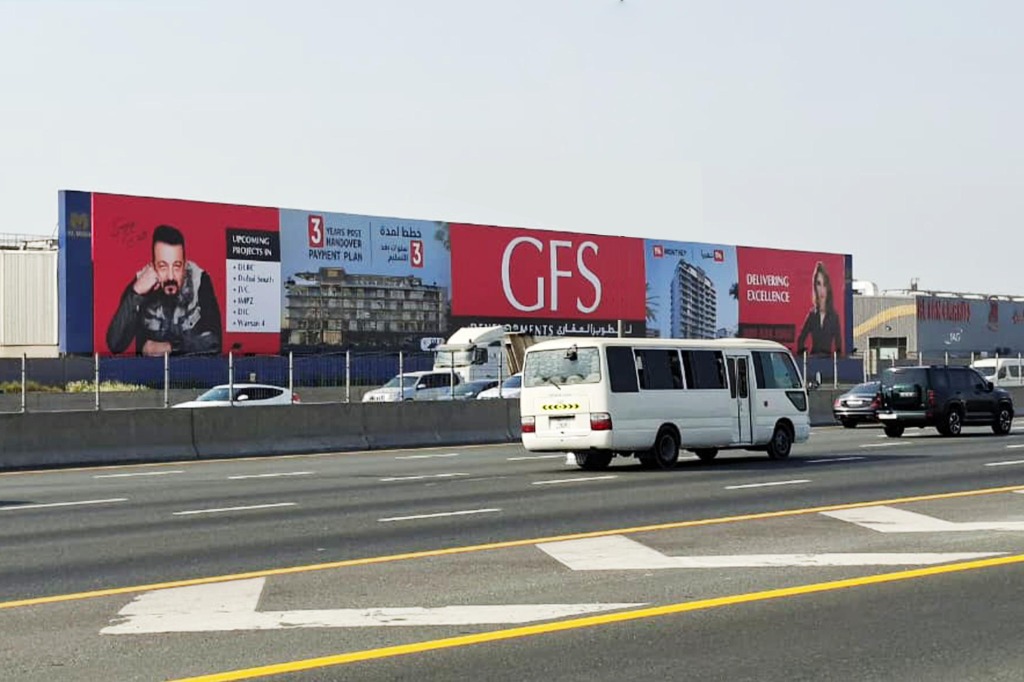

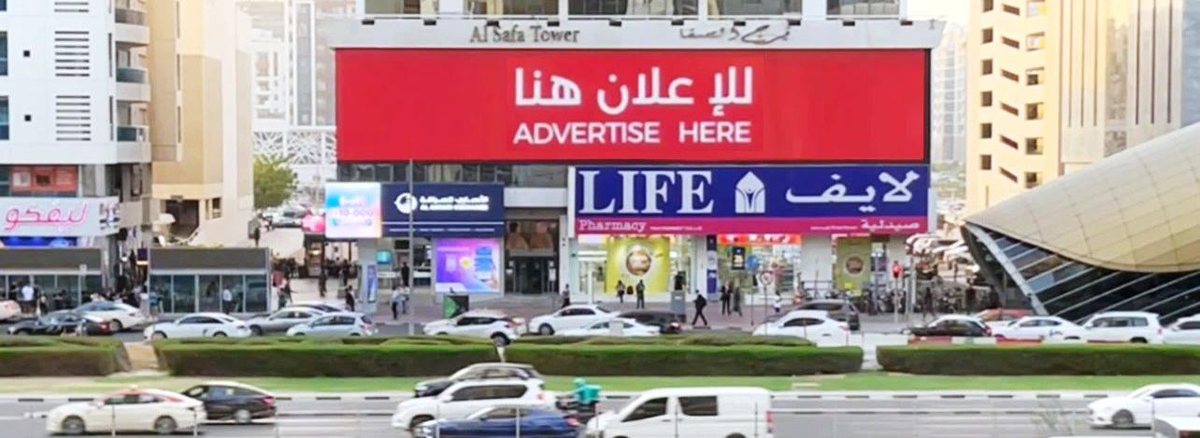
Glass facade advertising covers a building’s windows or curtain wall with printed graphics, while a building wrap covers a larger surface, such as a solid facade, a podium or a construction screen. Both turn architecture into a very large advertising surface. Both also depend entirely on the building: its structure, its glazing, its owner and its access, so the first question is never about the artwork. It is about whether the building can carry it.
This guide is a working checklist rather than a sales page. It explains the two formats, then walks through the checks we make before recommending a facade, and finishes with the installation and maintenance points that brand teams often overlook.
Glass facade advertising versus building wraps
The two names overlap in everyday speech, but they describe different products with different constraints.
| Glass facade advertising | Building wrap | |
|---|---|---|
| Surface | Windows and glazed curtain walls | Solid walls, podiums, scaffolding or site screens |
| Typical material | Window graphics that treat the glass | Large printed sheets fixed over the surface |
| Main question | What happens to light and the view from inside? | How is it fixed and what happens to the surface beneath? |
| Best for | Towers, retail frontages, offices | Under-construction sites, blank walls, temporary projects |
| Duration | Medium to long, depending on the glass and the finish | Often tied to a project phase or a campaign period |
For many projects the answer is a mix: a wrap on the solid podium and graphics on the glazing above. Our glass facade and building wrap service covers both approaches.
Seven checks to see whether your building suits it
- Who owns the surface? You need the written agreement of the building owner or manager, and often of the tenants who sit behind the glass.
- Which sides of the building can be seen? A tower that faces a quiet service road is a poor medium, however large it is. Stand on the roads people actually use and look up.
- What is in front of the facade? Trees, bridges, other buildings and signage can interrupt the sightline. Check from the approach direction, not from the foot of the tower.
- How does the glazing behave? Some glass has coatings, framing patterns or tints that affect how graphics appear. A sample test avoids surprises.
- What happens inside? Occupants still need light and, in many cases, a view. The material and the design need to respect that.
- How will crews reach the surface? Facade access determines the method, the schedule and the safety planning.
- Which authorities need to approve it? Rules and approval processes differ by emirate and by authority, and facade graphics may involve both the municipality and the building’s own management.
A facade campaign is won or lost at the survey stage. If the building cannot be seen from the roads your audience uses, nothing in the artwork can fix that.
Designing for windows, floors and structure
A facade is not a flat canvas. Window frames, floor lines and structural columns create a grid, and the design has to work with it, not against it. Text that crosses a frame line can be cut visually. A logo that falls across a column may be distorted.
- Place key elements inside clear zones, away from frames and joints.
- Use bold shapes and a limited palette, because the building is seen from far away, often at an angle.
- Keep copy minimal. A facade works like a very large sign, not like an advertisement with paragraphs.
- Check how the design looks at dusk and at night, when glazing reflects differently.
Print specifications for a surface this size need care. Our large-format printing work is produced in-house, so the colour checks and finishing happen with the same team that will fit the graphics.
Seeing out: visibility from inside the building
People who work or live behind a graphic do not want to lose the daylight or the view. That is why glazing graphics are not simply printed stickers. The choice of material and the design of the artwork determine how much light passes through and how the graphic appears from within.
Raise this early with the building management. Agreeing the principle at the start, including what the occupants will experience, prevents objections later and shows respect for the people who will live with the campaign every day.
Installation: why access decides everything
On a high-rise, the installation method shapes the whole project. Depending on the building, crews may work with rope access, with high-reach equipment or with a combination of both. Each method has its own safety planning, weather limits and timing, and a facade install is never a task to improvise.
Al Masa installs with its own crews, including rope-access and high-reach work for facades and bridges. That keeps the printing, fixing and site coordination in one team. A well-run installation also schedules around building operations, so that tenants and visitors are disturbed as little as possible.
Maintenance, safety and removal
Graphics on a facade face sun, dust and weather, so they need inspection over time. Edges, seams and fixings are the first places to check. Agree in advance who monitors the facade, how quickly a fault is fixed and what happens if part of a graphic is damaged.
Removal needs the same care as installation. A good plan covers how the surface will be restored and who is responsible for it. Put that in writing at the start of the project, not at its end.
What to agree in writing before work starts
Facade projects involve several parties, so verbal understandings tend to drift. A short written agreement, shared by everyone involved, prevents most disputes.
- Scope: exactly which surfaces, floors and sides of the building are covered.
- Period: the start date, the end date and what happens if the project runs late.
- Access: when crews can work, which areas they may use and how occupants are informed.
- Approvals: who obtains each approval and who holds the paperwork.
- Care: who inspects the graphics, and how damage will be reported and repaired.
- Restoration: how the surface will be left at the end, and who confirms it is acceptable.
None of this is complicated, but it needs to exist before the scaffolding or ropes go up. The best facade projects are usually the ones where the boring paperwork was finished early.
Where facade advertising makes the most sense
Facade formats suit moments when a building is the story. They work well for a project launch, a new tenant or flagship opening, or a site under construction that will become a destination. Developers and property brands use them to give a project a presence before it opens, and our guide to real estate launch campaigns shows how a facade fits with other formats.
If you are comparing a facade with other options, our overview of the types of outdoor advertising in the UAE gives the wider picture. When you have a building in mind, talk to Al Masa through our contact page with the address, the facade you want to use and your timing, and we will tell you plainly whether it can work.